
For years, my husband and I have said, “We’re not cruise” people. Twenty years ago, we cruised to Alaska. The buffets, evening comedy and musical shows, and swimming pools disappointed us. Casinos. art shows, liquor sales, special restaurants and wine packages seemed superficial. All we wanted to do was get off our moving hotel to hike Deer Mountain in Ketchikan, ride bikes to the Mendenhall Glacier, and float on a raft in an Eagle Preserve in Haines. We wanted an Alaskan experience.
Would we be happy touring the Netherlands during tulip time with friends we met on a Patagonia tour last year? That trip was with Globus, with which we have traveled since 2003, and the company of Avalon Waterways cruise line. Maybe it could work? The Avalon “Netherlands in Bloom” tour included one or two excursions (active, discovery or classic) daily complimentary wine and beer at lunch and dinner and free drinks during daily happy hour, floor-to-ceiling windowed cabins, on-board entertainment and fitness classes, and good healthy meals. Based on my research, the ship would be smaller than most river cruise boats and provide a more intimate experience. It was all inclusive — no Euros required were required once we were on board the ship.
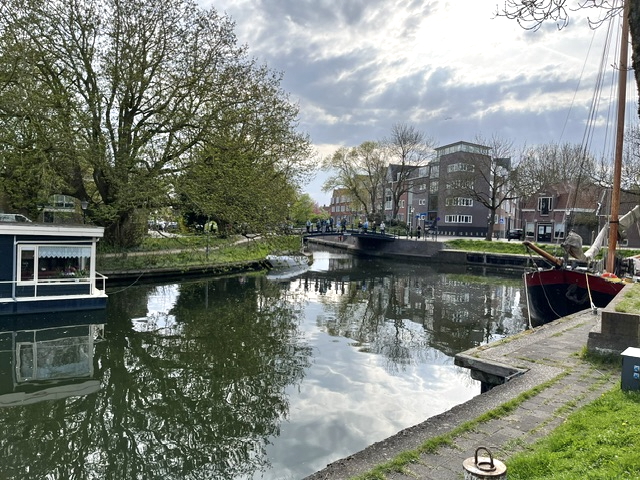
We spent our pre-trip night at the Westcord Jakarta Hotel, an Indonesian-inspired hotel in the harbor where ships sailing to and from the East Indies stopped during the Netherlands’ Golden Age. We enjoyed stunning IJ River views from our room, and the tropical forest that took over the beautiful lobby area felt exotic. We walked along the water, visited the Van Gogh museum, and ate dinner with friends in the museum district our first day. Uber drivers were great ambassadors for the storied below sea-level city of canals and art; their stories and insight enchanted us.
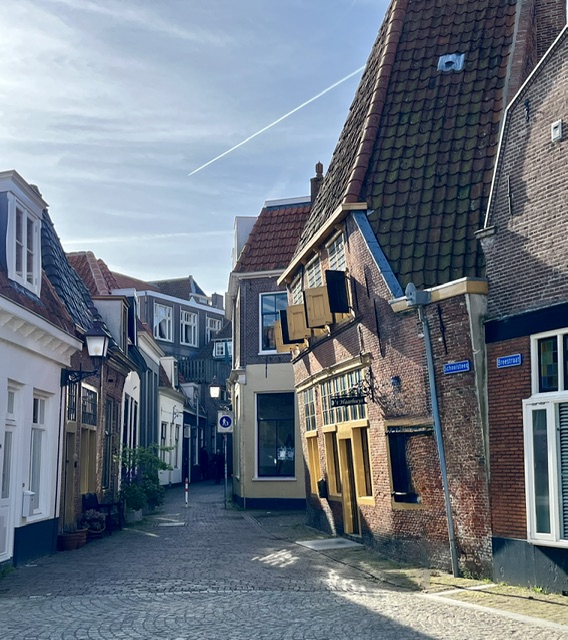
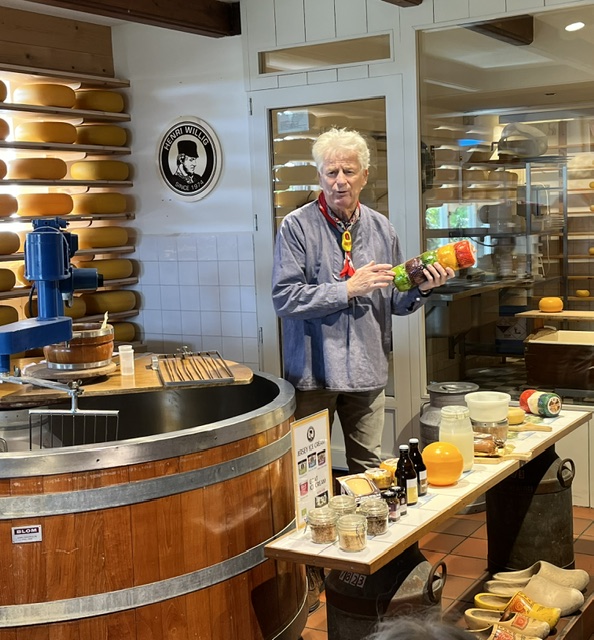
We were transported from hotel to the Avalon Panorama the next morning to eat lunch and unpack prior to the afternoon “Windmills, Canals & Cheese of the Netherlands” bus excursion. Narrow canals ran through the landscape of private yards like boundary markers, homes with triangular roofs stored grain on their top floors, and immense rows of red, yellow and purple tulips cheered us. As we were introduced to the methods used by the Dutch to control water and reclaim farmland, the quote “God created the world, but the Dutch created the Netherlands” seemed apt. Our first stop was a tour of the barn, production facility, and cheese house of Henri Willig’s sustainable dairy followed by a cheese tasting. We then drove to the Schermer Mill Complex and saw three of the 49 wooden mills that drained the Schermer. We felt the power of the windmill’s sails as the wooden millstones whirled and hummed, and inside one of the highly combustible windmills, we saw the simplicity of hearth, kitchen and sleeping quarters where a windmill family lived.
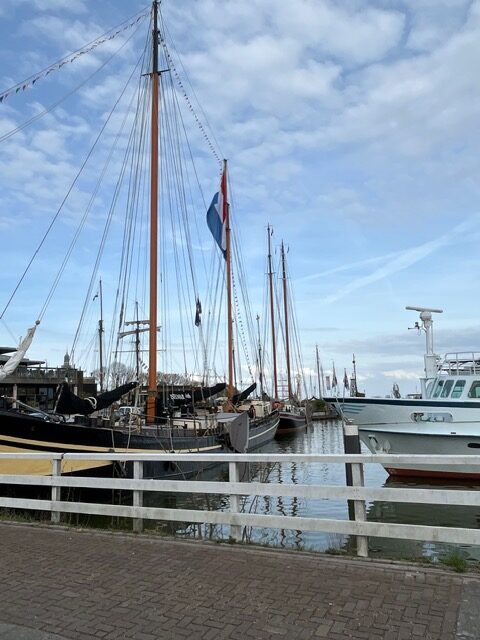
We sailed 18 nautical miles from Amsterdam to Hoorn, a town founded around 1300, during the night. The morning light in the harbor where sailboats rested was beautiful, as was the leisurely walk in the city center before it bustled with people riding their bicycles to work. The historic city in North Holland (a province in the Netherlands) is celebrated for its remarkably preserved 17th-century architecture, enchanting harbor and rich history as a major port during the Dutch Golden Age. Our guide for the day, Hans from Holland, was an entertaining guy who loved to talk about his homeland and pointed out the “dancing houses” that lean into each other and out over the sidewalk, so close to crashing down that they are propped up by steel reinforcements and new wooden pilings.
While we ate lunch, the ship cruised to Enkhuizen on the IJsselmeer (Lake Ljssel), described as a powerhouse of the Dutch Golden Age. Houseboats lined canals, wisteria climbed over fences, and a central square joined with a long commercial street provided shopping and people-watching opportunities. On our walk back to the dock, we passed elegant tall ships in the harbor being cleaned and prepared for the tall ships festival the following day.
We were still docked in Enkhuizen the next morning when we set out on an excursion that introduced us to the tulip business. Pronk Tulpen B.V. showed us a film and took us on a tour of their greenhouse factory where they grew tulips and cultivated bulbs for distribution all over the world. The number of tulip flowers they harvest and bulbs that they curate is amazing, but even more mind-blowing is how tulip farmers only have eight weeks a year to grow their tulips. Pronk Tulpen prides itself on innovating and automating their processes in a sustainable manner.
The itinerary said we should “relax and watch the scenery” in the afternoon. I took a walk on the deck, then found a comfortable upholstered chair in the lower lounge and read while sipping fruit-infused water and watching the scenery as the ship floated on a lake towards Nijmegen. We passed through 28 locks during our tour, and the ship was so quiet, I often did not know we were passing through a lock until we were passing through it.
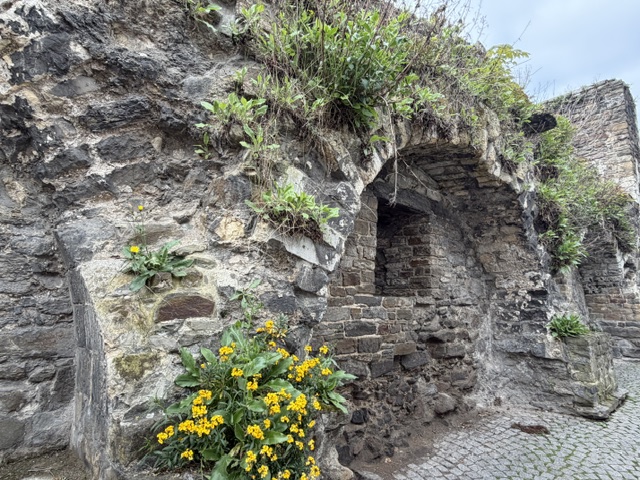
Refreshing morning air filled our lungs during the next morning’s tour in Nijmegen. Built by the Romans more than 2,000 years ago, Nijmegen is the oldest town in the Netherlands. The walled city located on the Waal River near the German border was mistaken for the city of Kleve and bombed by American planes in February 1944. Our guide showed us the memory wall with names and images of the 800 people who died in the bombing and an empty swing in a schoolyard where children died. Because of that tragic event, the city hosts an annual International Four Days Marches, when over 45,000 participants (civilian and military) from 70-plus countries walk 30, 40 or 50 kilometers daily for four days to focus on endurance and camaraderie. We admired the architecture and art of St. Stevens church and the remnants of Valkhof Castle, which was originally established by Charlemagne around 777. As generally happens, we were astonished by how old everything was.
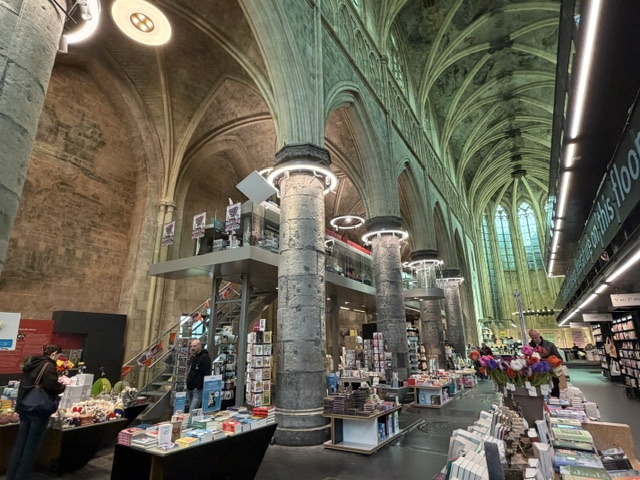
The Avalon Panorama arrived in the university town of Maastricht early the next morning. The city has settled on both sides of the Maas River around AD50 and is adjacent to the border with Belgium. We were fascinated by the wisteria-enhanced walls, vine-festooned canon archways, and hanging garden crags in the walls, nature’s beautifying work. Other highlights were the 1280 arch bridge; a column commemorating the location of the wooden Roman bridge; streets dating back to 1652; Our Dear Lady church; the Anna Maria Chapel; and the Dominica bookstore located in an old church. We returned to the city after lunch to sample beer on iconic Vrijthof Square.
We crossed into Belgium on the Scheldt River near the North Sea and sailed into Antwerp, which is Belgium’s second-largest city and is in the Dutch-speaking Flemish region. In many ways, we did not feel like we left the Netherlands. We visited the busy historic city center with its guild houses and made our way to the Cathedral of Our Lady and Grote Markt square with its medieval guild houses, restaurants and shops. We saw famous Rubens Renaissance masterpieces in the Cathedral that looked like an art museum. The lunch menu that day included Amelander mosterdsoep (smooth mustard soup with diced chicken), kibbeling (beer-batter fried cod), and Appleflappen (apple, raisin and apple-stuffed puff pastry). Again, we returned to town in the afternoon, this time to explore Grote Markt and try Corsendonk and Duvel beer.
We had a full day of excursions and entertainment in Willemstad, named after William of Orange. The seven-star shaped wall of the fortress was built during the Spanish war. We headed straight down a tree-lined dirt sidewalk to the Koepelkerk, a church established as the first Protestant church in the Netherlands in 1607, and enjoyed a pipe organ concert with old organ, which began with music by Handel (and brought me to tears). Outside the church was a charming cemetery, and as we walked along, we passed bunkers used by the Germans during WWII. Our guide took us to her own generational home where her mother lives in a converted garage and has a view of the haven-like gardens and pond, which provided insight into the Dutch reverence for family. There was an after-party on ship, and our hosts provided us with a cheese and Dutch Genevier tasting and performed traditional dances while wearing traditional Dutch clothing, including wooden shoes. We sampled three different renditions of the noxious Genevier liquor.
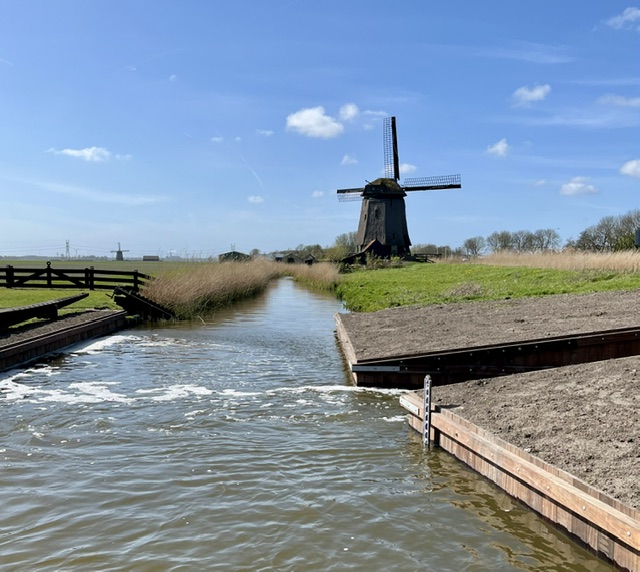
In the afternoon of the same day, we toured Kinderdijk, an old town of 400, home to 19 windmills, 16 of which today can be used as a backup system if the pumps fail. The windmills were erected in 1740 for flood prevention and water management. These windmills were different from those we saw previously — they were brick instead of wood. The park where we could walk along the canals was a tourist attraction, completed with a visitor center, a gift shop and vendors selling stroopwafels. We fell for the warm chocolate-covered stroopwafels, an afternoon snack that we would only allow ourselves on a vacation.
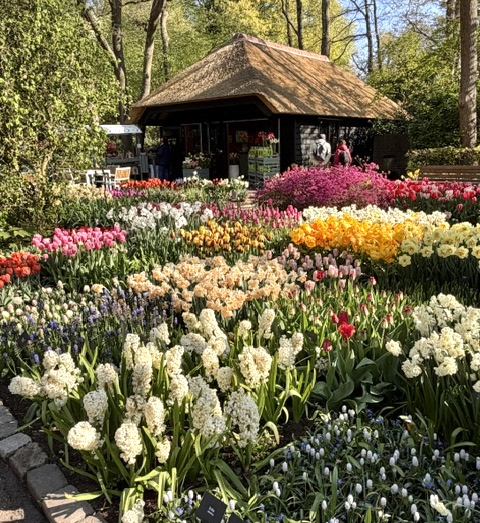
The next day, we were glad we chose only a half-day tour of the breathtaking Keukenhof Gardens because a full day would have been too much tulip time. Known as the “Garden of Europe” for its 70 acres of lush parkland, lakes and the world’s largest flower gardens — with more than seven million tulips, daffodils and hyacinths as well as other bulbs, planted each year — we were taking pictures even before we entered Keukenhof. The gardens are only open for eight weeks each year, after which the bulbs are pulled from the ground and the garden designers plan the next year’s flowerbed designs.
We chose to spend the afternoon in Gouda. At the Belvedere Restaurant, we sat at tables of two or four and enjoyed wine and charcuterie. Gouda is a captivating blend of medieval charm and modern vibrancy, with narrow cobblestone streets that wind around the iconic Markt square, dominated by the stunning Gothic Town Hall. The neighborhood is famous for Sint-Janskerk and its renowned stained glass windows. Gouda was once home to ten monasteries, who made cheese and wine, most notably at Our Lady of the Angels. That evening, we enjoyed a gala farewell dinner. I chose lemon pepper-crusted salmon, Kumara sweet potato soup, broiled half-rock lobster tail, and grilled halibut from the over-achieving menu and wondered why anyone would choose grilled chicken. Our relaxed evening ended with the string music of La Strata in the lounge.
During our morning Amsterdam canal cruise the next day, we finally saw how the people of the city live with the canals, old buildings and narrow roads. The houseboats were varied, with their rooftop gardens and dinghys, some old, some not so much, and real estate on a canal was much less expensive. We also came to understand how difficult and expensive it was to have a car — no wonder most people travel by bicycle. We saw Ann Frank’s narrow little house where she lived in an attic until just days before she was taken to her death, and ostentatious manors that have been converted into boutique hotels. All sparkling in the light reflected by the water. Water, water everywhere. Afterwards, we took a guided walking tour in the Jordaan district, a historic working-class neighborhood that today houses specialty shops and unique eateries. We had beer and bitter balls at Hoogendam microbrewery, herring with pickles and kibbeling outside a corner sushi eatery, sampled good Dutch chocolate at Haarlemmerbourf West, and then sat down to savor Dutch apple pie in a quaint dining room.
We were satiated with food, good service, comfort, memories and stories. It felt like it was time to leave our sailing hotel and restaurant. Now that we have been on a river cruise through the Netherlands and a bit of Belgium, we must change the script — we are now “cruise people.” Maybe the Balkans next year? We shall see.
See more photos of Claudia’s cruise HERE.