On Thursday December 11, a wide range of people involved in the area’s live performance scene packed the Sixty6 Music Lounge at the Midtown Collaboration center for an event called Cuyahoga Live Momentum, hosted by County Executive Chris Ronayne.
The event turned out to be largely informational, providing background on the economic impact and viability of independent music and comedy venues in the county. We learned that these venues have a huge economic impact on the region, contributing more to the state’s GDP than the entire sector in 28 states and generating more economic output than in 25 states, accounting for 40% of the economic output of such venues across all of Ohio. We also learned that they pay large amounts of state and local taxes and that in Cleveland alone, the independent venue sector employs more people than in 21 states. There were many other statistics shared about the impact of independent venues on the economy, including in tourism dollars making it clear that they were valuable contributors to Cleveland’s growth potential.
In contrast, we also learned that only 25% of such venues were profitable in 2024.
A sheet was passed out that listed a series of recommendations. Many of them were vague, minor or aspirational, or in the case of that long-proposed Great White Whale, the destination music festival, an idea past its prime and even potentially negative for independent music venues.
The most specific and promising ideas were presented by state senator (and music lover) Kent Smith, who has sponsored three bills in the state legislature addressing the needs of independent venues. Senate Bill 186 would provide a rebate on liquor taxes to venue with a capacity of under 3000 of up to $100,000 based on the amount of taxes paid, helping to push them toward a break-even point. SB 187 would offer a tax credit to investors in recording studios, similar to the film production credit, an idea proposed by Beachland Ballroom co-owner Cindy Barber. And SB 240 would allow counties to propose a tax on marijuana to benefit arts, culture and entertainment, similar to the cigarette tax that currently benefits arts & culture (but not for-profit independent entertainment venues) in Cuyahoga County.
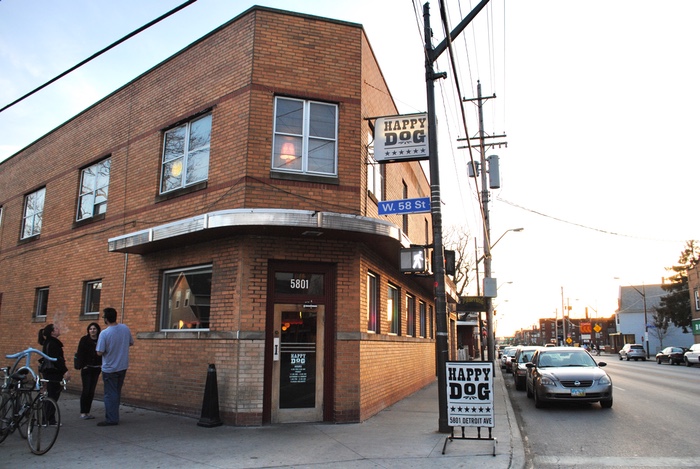
Another specific idea, likely to provide valuable information to guide next steps in promoting independent venues, was created by Happy Dog owner Sean Watterson: a survey of patrons of clubs, concerts and live entertainment to learn what they attend and why. In 2024, he helped spearhead a survey of people working in the music industry in the area to learn about how it impacted them and how they perceived its benefits and challenges. That survey was also done in several other cities with extensive music economies, such as Nashville and Austin. Watterson said that no other city has done such a survey of patrons; no details about the rollout are available yet.
An array of the typically discursive questions were posed in the Q&A period, but the final comment addressed a key issue impacting local independent venues. It was presented by musician John Panza, who with his wife founded the Panza Foundation to provide small grants to musicians and bands to fund projects such as touring and recording. He asked the live performance community to consider the importance of college radio stations such as WCBS, which was abruptly taken off the air in October and handed over to Ideastream Public Media to program 24/7 mainstream jazz. He reminded the assembled group that it was through stations like WCSB that people discovered the type of music that clubs such as the Happy Dog, the Grog Shop, the Beachland and others book. It was a fitting conclusion to an evening that presented a blizzard of statistics, a few concrete proposals and others that hold promise but need more fleshing out.