Cleveland loves a rendering. We know how to unveil an apartment tower, stadium district, lakefront plan, renovated office building or mixed-use development. We gather around the architectural drawings, admire the proposed public spaces and imagine the restaurants, stores and sidewalks that will someday be filled with people. Then, too often, we move on to the next rendering.
The problem is not that Cleveland has failed to invest in buildings. It is that we have too often treated buildings as a substitute for people. Apartments, storefronts, office towers and entertainment districts are ultimately containers. A city comes alive only when people fill them: residents, families, workers, students, entrepreneurs, caregivers, customers and neighbors.
That is the larger meaning of the scheduled closing of downtown Heinen’s. It is more than the loss of a beautiful grocery store inside one of Cleveland’s most striking historic spaces. It is a warning about insufficient density and the fragility of a downtown economy built too heavily around workers commuting into the city each morning and leaving at the end of the day.
When Heinen’s opened downtown in 2015, the central business district still depended on a substantial weekday population arriving at office towers, buying lunch, running errands and shopping before returning home. Those workers helped support an ecosystem of restaurants, retailers and service businesses that extended well beyond the companies that employed them.
Then the geography and nature of work changed. The pandemic emptied offices, and hybrid and remote work meant that many employees never returned five days a week. Artificial intelligence may now change that geography even more profoundly by affecting how many people companies employ, what kinds of work they perform, and whether that work requires them to gather in a downtown office.
Downtown Cleveland cannot build its future around the hope that the old office-worker economy will simply reassemble itself. Offices will remain important, but downtown needs a more durable foundation: residents who shop throughout the week, students who remain after graduation, entrepreneurs who open businesses, families who use the sidewalks and public spaces, and immigrants who put down roots.
A daytime population can disappear when employers change their workplace policies. A residential population creates neighborhoods, supports stores and schools, and gives a city life beyond the hours of nine to five. Cleveland therefore needs more than another development project or another campaign to lure employees back to their cubicles. It needs more people living, studying, shopping, building businesses and raising families here.
For decades, Cleveland’s development strategy concentrated on improving the physical product. The city restored historic buildings, constructed housing, expanded entertainment districts and created amenities that would have seemed unimaginable during downtown’s lowest years. Much of that work was necessary, and some of it was transformative. But amenities are not a population strategy. They are the price of admission.
The underlying assumption was that if Cleveland built attractive places, people would naturally come. That is no longer enough in a country where population growth is slowing and older industrial cities are competing for many of the same workers, students and residents. Cleveland cannot simply wait to be discovered. It has to recruit.
More than 20 years ago, Rose Zitiello and I argued in “Reclaiming Cleveland’s Immigrant Entrepreneurs,” published by CoolCleveland, that Northeast Ohio was failing to capitalize on the talent, capital and international networks of immigrants. We contrasted Cleveland’s population losses with the rapid growth of cities that had become new immigrant destinations and urged the region to reclaim its historic role as a gateway for newcomers.
Two decades later, Cleveland has improved its physical product considerably. What it still has not built is a population-recruitment system equal to the scale of its demographic challenge.
Global Cleveland was launched in 2011 around the idea that attracting international newcomers could help replenish the workforce, stabilize neighborhoods and connect Northeast Ohio to the global economy. I was involved in its early founding and also helped with the launch of Global Detroit. Both efforts rested on a simple proposition: older industrial cities did not merely need better buildings. They needed more people.
Cleveland, however, embraced the language of immigrant attraction more enthusiastically than it built the machinery necessary to recruit immigrants at scale. A welcoming campaign is not the same as a recruitment system, and a cultural festival is not a population strategy. One nonprofit organization, however committed, cannot substitute for coordinated action by city and county government, universities, hospitals, employers, developers and civic institutions.
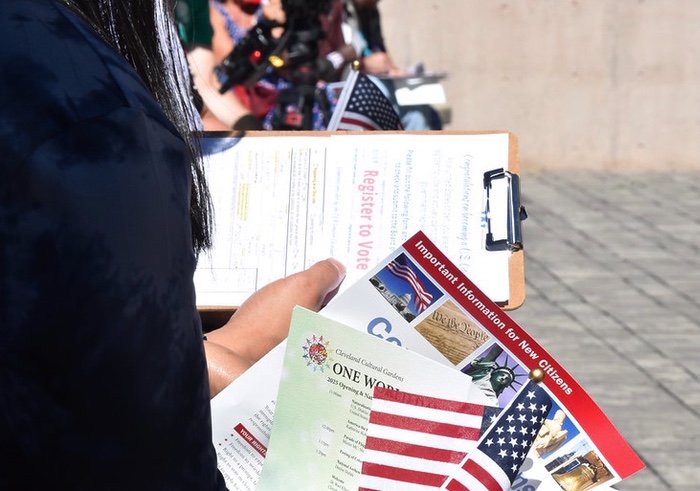
The economic case for that coordination is strong. A 2022 American Immigration Council report found that immigrants in Northeast Ohio paid more than $1.5 billion in taxes, possessed $3.9 billion in spending power and represented 8.1 percent of business owners. Yet Cleveland itself remains only about 6.3 % foreign born.
That is more than a demographic statistic. It represents a missed growth opportunity.
Immigrants are not simply attracted to cities that are already succeeding. They frequently help cities succeed by opening businesses, buying homes, filling difficult-to-staff positions, enrolling children in schools, supporting commercial corridors, and connecting local companies to international markets.
Cleveland has a compelling offer to make. A nurse, engineer, researcher, physician or entrepreneur priced out of New York, Boston, Washington or Toronto may still be able to build a middle-class life here. An international student graduating from Case Western Reserve University, Cleveland State University, or another regional institution can pursue a serious career without surrendering half their paycheck to housing. An immigrant entrepreneur may be able to obtain a storefront or purchase a home at a cost that would be impossible in many larger cities.
But offers do not sell themselves. Cleveland should create a genuine newcomer-recruitment system in which universities identify international graduates who want to remain in the region and connect them with employers prepared to sponsor workers. A regional immigration desk could help smaller companies understand immigration options that major corporations already know how to use.
Economic-development organizations should match immigrant entrepreneurs with vacant storefronts, financing and technical assistance. Cleveland should market itself directly to families and entrepreneurs being priced out of larger cities while treating its existing immigrant communities as recruitment networks rather than merely cultural constituencies.
Regional leaders should also advocate for a federal immigration pilot allowing communities experiencing population loss, workforce shortages, commercial vacancy and demographic aging to sponsor additional workers and entrepreneurs. The proposed Heartland Visa offers one possible model for connecting immigration policy to the needs of places that have residents and businesses to gain.
Immigration alone will not solve Cleveland’s problems. New residents will not repair weak schools, eliminate crime, fix public transportation or cure poor leadership. Any successful recruitment strategy must be accompanied by competent government, safe neighborhoods and reliable public services.
But Cleveland cannot cut, consolidate and redevelop its way to growth while overlooking the essential ingredient of a growing city: more residents.
The closing of a downtown business may be blamed on parking, competition, public safety, prices or changing consumer habits, and usually several of those factors matter. Beneath many of them, however, lies a more fundamental problem: there are not enough people using downtown often enough to support everything Cleveland has built.
For decades, Cleveland has worked to make itself look like a place people would choose. It must now find those people, invite them, recruit them and help them build lives here.
Cleveland tried buildings harder than it tried people. It is time to reverse the order, because a city does not come back when the rendering looks alive. It comes back when its streets are full of life.
Richard T. Herman is a Cleveland immigration lawyer, founder of Herman Legal Group, and co-author of the book, Immigrant, Inc.