In a presentation to the American Institute of Architects at the organization’s annual convention in Atlanta last week, our team — Jean Loria, the biologist that conceived of the BioCellar concept; Rob Donaldson, the “green” architect that developed the brilliant design; and myself, who built it — found ourselves repeatedly stressing one point to those in attendance: commitment.
As America at last turns its attention to renewing our inner cities, we’re finally coming to the realization that when we view the wider region as an apple, we then understand that, like an apple, said region simply cannot survive with a rotting, hollowed-out core. However, much of the initial work to save urban areas will, by necessity, have to be accomplished by professionals — biologists, architects, lawyers and experts on green building technology — on a volunteer basis. Once the movement to rebuild our cities as planned green, sustainable neighborhoods gains enough momentum, funding will follow as skepticism over the viability of the concept wanes.
What Donaldson made crystal clear to those in attendance at our session is that, simply because they are not being paid when doing pro bono work, they should not — indeed cannot — treat projects in a second-class manner. They have to exhibit the same level of commitment and professionalism to community projects they volunteer to take on as they do to the paid projects they work on for large, wealthy clients.
Pretender — those folks signing on to do good works merely as a means of fattening their résumés — really should rethink their intentions. Doing substandard, slipshod or untimely work actually sets projects and agendas back instead of advancing them.
Granted, dealing with neighborhood folks who are full of good intentions but often lack experience or even understanding of the notion of being on time for meetings can be a huge pain. I know this from experience. But professionals need to understand the challenges that await them before signing up for community projects, prepare for them as best they can, and realizing that they are not dealing with peer professionals, learn to be tolerant, while at the same instance encouraging neighborhood folks to learn to be as professional as possible.
While the American Community Gardens Association has been around for over 40 years (its annual convention will be held in Cleveland in August of 2016) and Cleveland enjoys the reputation of being in the forefront of the movement that organization represents, the failure rate for community gardens, hoop houses and other green projects — for a number of reasons — remains relatively high.
The problem — by and large — is one of lack of adequate planning, which takes getting buy-in and input from the wider community. Building consensus in the community creates a sense of ownership, and people tend to take better care of what they own. The trick for the professional is to learn to listen well to neighborhood voices, hear what residents want for their community and then to (as gently as possible) assist in creating the strong infrastructure of committed individuals that will stay the course and make whatever project is undertaken a success.
But for any of that to occur, any professionals seeking to help need to look deeply inside themselves to plumb the depth of their own commitments, realizing they cannot seriously help by half-stepping. Many residents of struggling or marginal neighborhoods have had enough bad experiences with professionals that come in over promising and under delivering. They don’t deserve to be let down once again.
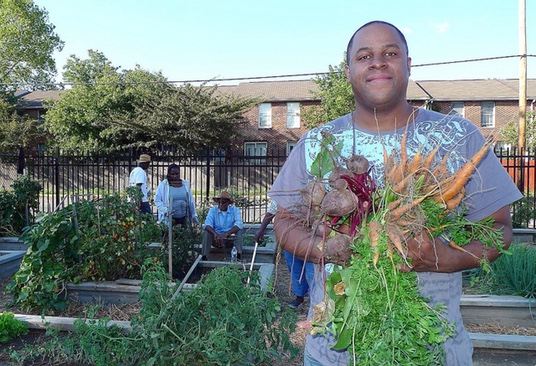
[Photo: TC Davis/Flickr] From Cool Cleveland correspondent Mansfield B. Frazier mansfieldfATgmail.com. Frazier’s From Behind The Wall: Commentary on Crime, Punishment, Race and the Underclass by a Prison Inmate is available again in hardback. Snag your copy and have it signed by the author by visiting http://NeighborhoodSolutionsInc.com.