As a professional writer, amateur artist and avid reader, what interests me more than anything else is connection. Human beings are drawn into relationships with other humans by shared human experience and the synchronicity that brings us together. For example, my current art instructor knew me well enough within weeks to offer The Place of Tides by James Rebanks as a book I would appreciate. How did he intuit that?
Within the last couple of months, I visited the Van Gogh Musuem in Amsterdam, the Louvre in Paris and the Cleveland Museum of Art’s Manet & Morisot exhibition accompanied by France in the Time of Manet & Morisot. Art requires that we study the artists behind the work and the trajectory of their artistic journey. The artist’s life, human interactions and the connections they make provides the subjects and inspiration for their art, and a glimpse of their world view. Art, in my opinion, is about connection with others and making those connections in our minds.
Everyone knows Van Gogh struggled with depression. His artistic journey was a biopic of how he experienced life. His early self-portraits felt hopeful, his later ones felt troubled. For a long time, he worked in a vacuum, and alone with his art, he struggled, as many of us do without encouragement. When he studied in France with other artists, his work, particularly his flowering trees, became lighter and happier. His time in southern France took him on a journey with the color yellow, which is warm and happy, and became his preferred color. It was the focus of the recent exhibition Exhibition Yellow. Beyond Van Gogh’s Colour, at the Van Gogh Museum; the audience was asked about their own experiences with the color, an intriguing question—the feel of dandelion petals, the smell and taste of lemons, the surprising yellow flight of a goldfinch? His illness couldn’t save him, but I’m glad Vincent found the beauty of nature and human interaction during his short life.
During an art historian’s guided tour of the Louvre in Paris, the focus was on the most significant art in the museum, like the Mona Lisa. For me, Praxiteles’ Apollo Sauroktonos at the Louvre was not as interesting as the 4th-century BCE bronze “Cleveland Apollo,” which is missing its arms. The CMA’s Cupid and Psyche, which was painted by Jacques-Louis David, is much more mischievous and interesting than Amor and Psyche by François-Édouard Pico on display in Paris. Being able to compare the same art objects made by different artists told me a great deal about the artists’ view of the world and his internal life. I felt disappointed by the Louvre because the Cleveland Museum of Art has spoiled me with intimate and beautiful galleries and my ability to go there whenever I want. My main takeaway after visiting the world’s largest art museum was that artists have always taken from existing art and artists to create their own art.
Home again from Europe, one of the first things I did was buy tickets to Manet & Morisot, which just closed at the Cleveland Museum of Art. Édouard Manet was the older brother of Berthe Morisot’s husband, and Morisot often posed for Manet. Manet influenced her art, but over a period of roughly 15 years when they competed and collaborated with each other and collected one another’s work, we can see the evolution of her influence on him, particularly Morisot’s skill in plein air and quick paintings of gardens and seascapes. While Manet was the famous one, Morisot became his equal. Morisot’s 1885 self-portrait shows a woman who was her own person, influenced by what she saw and not what others told her to see, the first female member of the impressionist movement in Paris.
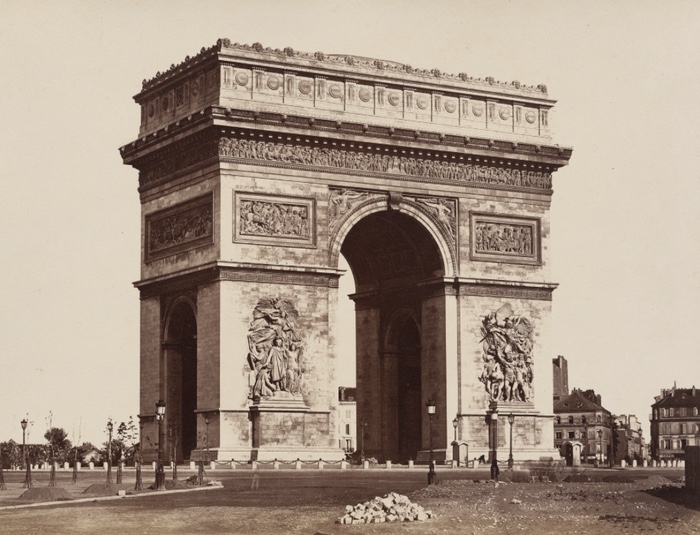
While Manet & Morisot has closed, you can still see its companion show France in the Time of Manet and Morisot, on view through August 26 in the Mark Schwartz and Bettina Katz Photography Galleries. It features work by late 19th-century photographers who documented the explosive changes happening in Paris during the artists’ lives and took portraits of the other important creatives of the period such as actress Sarah Bernhardt and poet Charles Baudelaire.
Having just visited Paris, the photographs from the time when Manet and Morisot were living and Paris was being rebuilt and beautified, lent greater depth to the experience of their art—and I was searching for buildings and streets I’d just seen (synchronicity!). And I spent extra time in the galleries devoted to Cleveland artists—would people of the future celebrate Cleveland artists as much as those in Amsterdam and Paris celebrate theirs?