
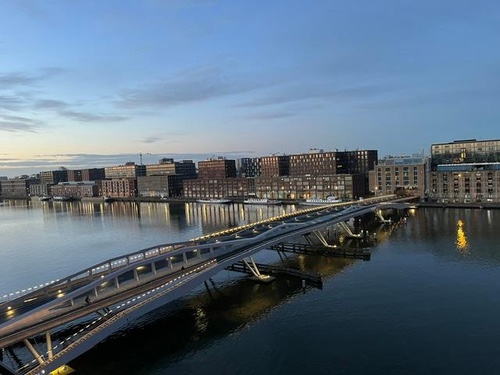
The first thing I noticed when we arrived in Amsterdam was how much water there is. Our hotel, the Amsterdam Jakarta, was on an island on the River IJ from which ships departed for Indonesia to trade with the East India trading company, which felt like Medieval exotica. As we floated on the canals and rivers and drove through the countryside where homes and farmsteads used ditches for drainage and irrigation, what stood out in The Netherlands was how land and water peacefully reside together.
As climate change increases sea levels and coastlines become threatened, the country that has always dealt with too much water can be a source of inspiration and a model of innovation for the rest of the world. Amsterdam navigates the water situation with grace, continuing to reshape their waterfront by demolishing disused shipping wharfs, dockside warehouses and industrial estates, and replacing them with modern apartments, modern offices and cultural institutions. The morning sun shines upon the riverfront development in a watery light created by reflection—and I was mesmerized.
About a quarter of The Netherlands is below sea level, and one town is 22 feet below sea level. But the 17thcentury canals and the tall rowhouses along them continue to be part of the country’s history, and its charm. In a world where severe flooding is rampant, the masterful water control methods of the Dutch can teach us some things. What are those lessons? How can they be a model for all of us?

It turns out that water is at the heart of The Netherlands. In mid-April, we embarked on a magical Avalon Waterways cruise and land tour of The Netherlands during tulip time. During our introductory tour of windmills, canals and cheese, we saw canals, lakes and rivers everywhere we looked. We learned that The Netherlands is a global leader in agriculture, horticulture, global trade and tourism because of its strategic location on the North Sea. Our entire cruise would be centered on those elements of Dutch culture. But we also learned a lot about flood management.
Catastrophic floods, like the St. Elizabeth’s Flood in 1421 and the flood of 1953 which killed over 1,800 people, forced the Dutch, who had a persistent struggle against nature, to make advancements in flood management techniques. For example, the wind power of the iconic grain-grinding windmills was harnessed to pump water out of lowlands and back into rivers beyond the dikes—in the 1800s, there were more than 9000 windmills in the Netherlands. Sixteenth-century windmills still dot the landscape, mostly because they’re so iconic, but their wind power can be harnessed if necessary (if the electric pumps don’t work). We toured windmills next to canals and saw the huge screws churning water and tried to imagine the lives of the people who lived in the windmill buildings who had to be alert to the possibility of fires.

We saw beautiful fields of tulips, planted in lines of red, pink and purple. The yellow rapeseed plants that are grown as a cover crop and used in green manure, oils and bird feed brightened the landscape. At a dairy farm, we were amused by how the cows followed each other from grazing pastures to automatic milking machines without human assistance. We visited a tulip bulb factory and huge touristy gardens of blooming spring bulbs. We walked through ancient towns, like Hoorn and Enkhuizen, where houseboats lined canals and tall ships awaited festivals in harbors.

From roughly 1588 to 1672, the Dutch Republic became one of the leading commercial and maritime powers in Europe due to its presence along major shipping routes and its ability to control the incessant presence of water. By the end of the 20th century all sea inlets had been closed off from the sea by dams and barriers. The Zuiderzee Works are a system of dams, land reclamation and water drainage works. The basis of the project was the Afsluitdijk, which was built in the 1930s to dam off a large shallow inlet of the North Sea. Following the damming, large areas of land were reclaimed in the newly freshwater lake body by means of polders, pieces of low-lying land reclaimed from the sea or a river and protected by dikes.

Our riverboat cruise gave us a wonderful perspective on The Netherlands, its culture, history, industry and people. The Dutch were more than happy to share their way of life with us. But I keep thinking about how they had to learn to live on the land despite the water, and how they turned what they learned into a robust economy where people no longer worry as much about the possibility of historic floods. I hope the world is watching how they manage it because what they’re doing is a gift to all of us.
