Benjamin L. Crump is a Florida attorney who specializes in civil rights and catastrophic personal injury cases such as wrongful death lawsuits. He represented the families of Trayvon Martin, Breonna Taylor, George Floyd and other high-profile cases involving allegations of police misconduct. His reputation and influence in legal circles have earned him the name “Black America’s attorney general.”
Clevelanders will remember that Crump represented the family of 12-year-old Tamir Rice, who was shot by Cleveland Police officer Timothy Loehmann on November 22, 2014. Rice was in a pavilion at the Cudell Recreation at 3:30 in the afternoon. The caller who reported seeing Tamir allegedly acting suspiciously at the park stated twice to police dispatch that the item in Tamir’s hand was probably a toy gun. But within seconds of his arrival at the scene, Loehmann shot and killed Tamir. He asserted that Tamir did not respond to demands to “show me your hands” and that he was in fear of his own safety. The grand jury declined to indict the officer.
Ultimately, the City of Cleveland settled allegations of misconduct and wrongful death with the Rice family for $6 million dollars. Loehmann is no longer a Cleveland Police officer. It was later determined that he misrepresented information on his original application for employment, which resulted in him being fired by the mayor.
I admit that when I saw an announcement that Crump had written a novel, I was not overly enthusiastic about reading it. In recent years many politicians and TV personalities have written novels trying to capitalize on their name recognition to sell books likely written by ghostwriters. I started several such works and none of them really grabbed my attention. So I put in my order for the Crump book from the free bookstore — the Cuyahoga County Library System. When it arrived one snowy afternoon, I started reading, frankly, not expecting much. An hour later, I was still turning pages, and two days later, I stayed up past my bedtime finishing it.
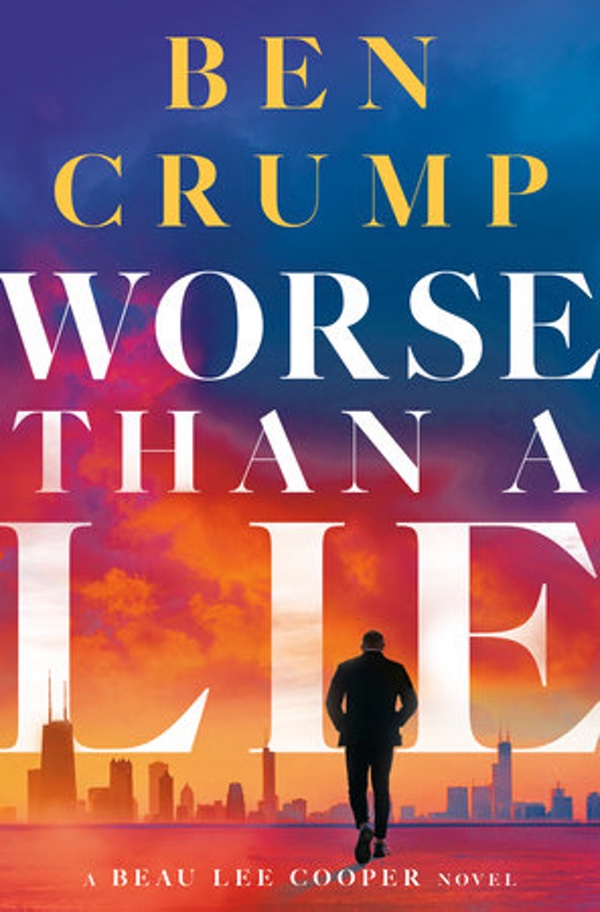
Crump’s novel is about a subject that he knows well — police shootings, allegations of police misconduct, investigations of police shootings and the resulting trials. The novel chronicles the story of Hollis Montrose, a former Chicago police officer who resigned from the force to have a spotless and less stressful career as a Chicago transit police officer. While off duty, on the night Barack Obama is elected president, Montrose, who is Black, is in involved in a traffic stop by Chicago police. The stop results in Montrose being shot ten times in the back and eventually being charged with assaulting the police officers.
The novel’s central character is Texas attorney Beau Lee Cooper, a character Crump seemingly modeled on himself, who happens to be in Chicago at the time of the shooting. He ends up championing Montrose’s cause and representing him in court.
The story is engaging and keeps the reader involved in the plot and wanting to do know what happens next. There are interesting twists and turns, and minor characters and subplots that ultimately impact the outcome of the story. Other characters, like Cooper’s co-counsel, a feisty young Puerto Rican female attorney, and his investigator, an ex-felon who turned his life around and now works for Cooper, all combine to make for a well-thought-out story that is entertaining and engaging. And at 350 pages it does not tax the readers’ attention span.
While lawyers and people who work in the criminal justice system will be familiar with how police shootings are investigated, Crump lays out the procedure in such a way that a newcomer to law enforcement will learn the basics of the criminal justice system, and veterans of the system will have their knowledge refreshed and perhaps enhanced.
Crump shows how latent biases and prejudices and a belief among some police officers that they must stand by their fellow officers, no matter how wrong they are, can exist. While I am sure that there are many honest and law-abiding police officers, prosecutors and judges in Chicago, Crump shows the underside of the Chicago criminal justice system and how things can go terribly wrong.
If you enjoy police shows like Law and Order or a good legal thriller, you will love his book. But there are a couple of takeaways, in addition to an enjoyable read. The novel can be turned into a learning experience.
The first is that if you see the police interacting with an individual and something does not seem right, take out your phone and start filming. When the police say one thing and the person detained says another, it never hurts to have an additional set of eyes, even with police body cams. If a private citizen had not videoed the events surrounding the arrest of George Floyd, Floyd would not be a household name, just another unknown victim of police brutality.
The judge in the trial Crump describes heavily favors the prosecution. We have an election for judges of the Common Pleas, Appellate and Ohio Supreme Court in May for the primary and in November for the general election. Knowing who you are voting for matters. Spend time checking out the background of judicial candidates before you vote for a popular name or pass over the judicial ballot. Check endorsements. Do some research. Someday, you or one of your friends or relatives may appear before a judge and you want someone who is fair and impartial.
Finally, there is a trial for Hollis Montrose. But there are only two Black members of the jury. It is important for all people, no matter what their race, to respond to summons to serve as jurors. Juries should be made up of a cross section of the community. Don’t spend time trying to get out of jury duty. Do your civic duty and serve so that you can be a part of the system. It makes the system fair for both sides.
The cover of Worse Than a Lie predicts that it is the first of a series of novels that Crump plans to write about the legal escapades of Beau Lee Cooper. I anxiously await the next book. But I don’t want Crump to take time away from the groundbreaking work he does across the country to make sure all people are treated fairly.
For those who have read my other book reviews, you will note that this is the first time that I’ve reviewed a work of fiction. The plot and the story of Worse Than a Lie are timely and relevant. What happened to the fictional Hollis Montrose could happen to anyone, especially in the age of ICE. It happened to Renee Nicole Good and Alex Pretti in Minneapolis. And of course it happened to Tamir Rice, right here in Cleveland.

C. Ellen Connally is a retired judge of the Cleveland Municipal Court. From 2010 to 2014 she served as the President of the Cuyahoga County Council. An avid reader and student of American history, she is a former member of the Board of the Ohio History Connection, and past president of the Cleveland Civil War Round Table, and is currently vice president of the Cuyahoga County Soldiers and Sailors Monument Commission. She holds degrees from BGSU, CSU and is all but dissertation for a PhD from the University of Akron.