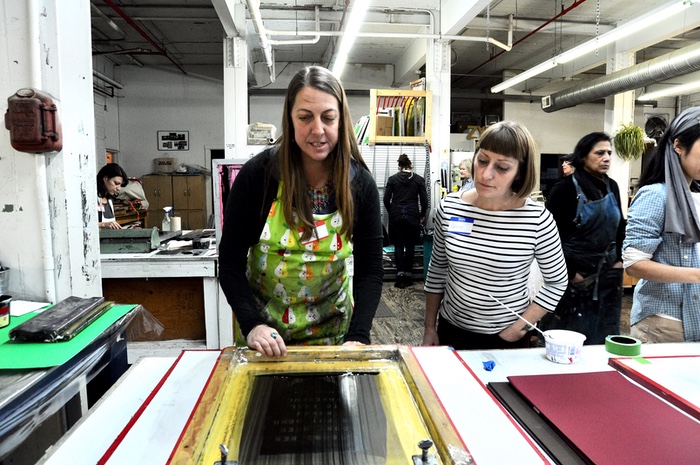
I’m not sure whether it’s the flood of local holiday sales—the warm glow of classic Rudolph animations and images of Santa’s workshop—or the stack of annual fundraising letters piling up in my mailbox. But this time of year has me thinking deeply about the workshops that actually matter right now: the cooperative, communal, artist-run maker spaces that have been quietly transforming Cleveland.
While many traditional arts and educational institutions in post-industrial cities struggle to maintain relevance, Cleveland’s collective maker spaces are punching well above their weight. These are vibrant, collaborative hubs—ateliers, hive buildings, cooperatives—where tools, skills and ideas are shared. And they are doing the cultural heavy lifting that larger institutions, too often co-opted by politics or power, have lost the capacity or appetite to do.
Meanwhile, state policy is shifting rapidly. Ohio House Bills, including the looming HB 96, are pushing colleges to guarantee work-based learning experiences that align with JobsOhio. Internships, mentorships, shadowing—these are suddenly priorities in boardrooms across higher education. Yet colleges are expected to build these pathways without additional funding or infrastructure, placing enormous pressure on institutions already stretched thin.
At the same time, young people are making their own decisions. More than one million college-eligible students each year are opting out of higher education because of financial, logistical or social barriers. And they’re not wrong to look elsewhere.
My son Will is one of them. He spends his mornings at Bay High School and his afternoons in the exceptional Westshore Vocational Welding Program, outfitted by Lincoln Electric at Lakewood High School. Every day, he’s immersed in a state-of-the-art environment where learning is hands-on, communal and connected to real jobs. He’s discovering what so many young people crave: meaningful work, creative autonomy, and a pathway into thriving, collaborative maker environments.
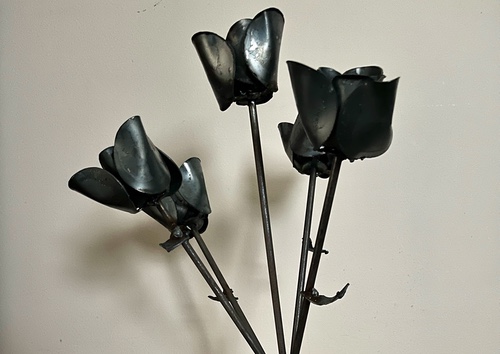
Cleveland is uniquely positioned for this moment. We have a remarkable density of artist-run, women-led maker spaces that are already doing what state systems say they want to do—without fanfare, bureaucracy or mandates. These spaces provide:
Collaborative studios
Specialized equipment
Residencies and apprenticeships
Community-engaged workshops
Sustainable arts practices
Access to craft-specific training
Gathering spaces that cultivate belonging
And they sit in neighborhoods across the city—Collinwood, Hough, the near West Side—woven into a school district constantly reimagining itself.
For years, national narratives fixated on “the tech economy,” overlooked the practical, creative and economic power of tradespeople, artisans and craftsworkers. Yet in Cleveland, maker spaces have safeguarded those traditions, offering young people—like my son—workforce skills wrapped in creative purpose and community.
Consider just a few examples for our maker-space movement to brag about:
Zygote Press, the largest cooperative printshop between New York and Chicago.
Praxis Fiber Workshop, home to two digital looms that attract fiber artists from around the world—and an African Indigo garden with plants grown right on their Collinwood campus to dye fibers with and develop a circular economy on their new campus.
The Morgan Conservatory, whose Hough-based kozo garden produces the largest kozo crop in North America for producing handmade paper.
The Cleveland Print Room, SPACES, Zygote Press and the Morgan among others, all sharing resources and strengthening one another through the ArtsPASS reciprocal membership program.
These aren’t just “spaces.” They are living ecosystems built from Cleveland’s legacy of manufacturing, production, and craftsmanship. They grew out of the literal soil of our city—its resilience, its ingenuity, its industrial backbone. Collectively, their community impact spans more than a century.
And they’re still expanding.
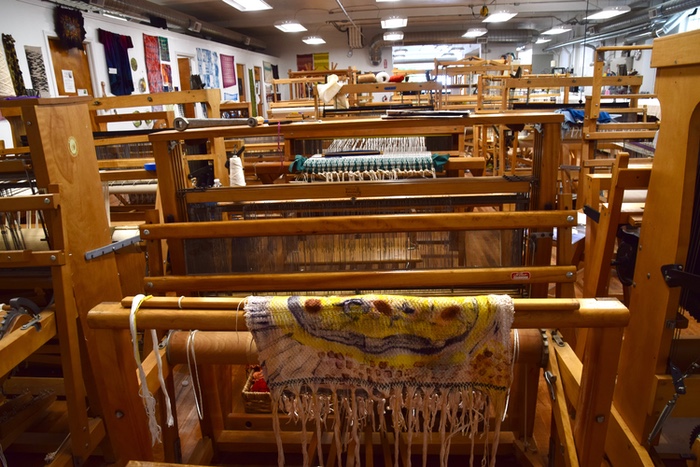
Many occupy former warehouses, automotive shops, printing facilities, commissaries and family-owned upholstery shops—the very same industrial footprints that gave Cleveland its identity in the first place. Through their work, they are preserving our past while building our future.
As we look toward the class of 2026 and the next generation of students navigating a confusing landscape of higher-education expectations, unfunded mandates and shifting opportunities, Cleveland’s maker spaces offer a powerful alternative narrative—one rooted in skill-sharing, intergenerational knowledge, creativity and belonging.
While institutions debate how to stay relevant, Cleveland’s maker spaces already are.
