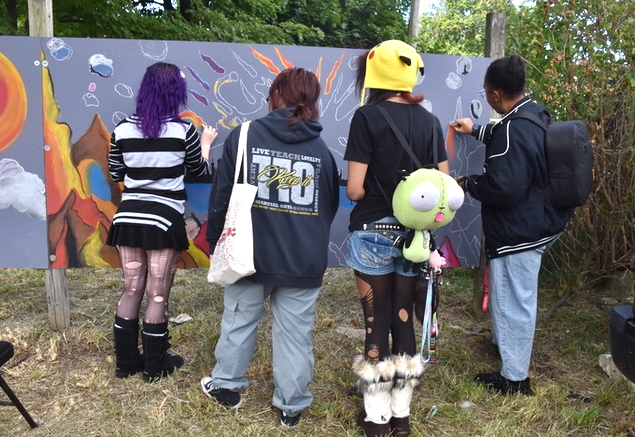
When Cleveland’s $3M Transformative Arts Fund (TAF) was announced, the local arts community felt that finally a significant amount of money might be committed to boosting artists and projects in the city’s communities. But since the TAF projects wrapped up in the fall of 2025 after a year of work, there have been questions over the lack of transparency and how the money was spent.
Cleveland City Council President Blaine Griffin and Mayor Justin Bibb introduced emergency legislation in late 2022 to establish the Transformative Arts Fund, a $3 million initiative aimed at enhancing public art in communities with significant BIPOC (Black, Indigenous, and People of Color) populations using federal funds from the American Rescue Plan Act (ARPA).
Under the direction of Rhonda K. Brown, senior advisor for arts and culture in the city of Cleveland, the program was meant to “enrich the arts community through selected artist-run projects, and drive social change.”
Seven projects were chosen, with grants ranging from $312,185 to $482,125, led by Cleveland-based artists and partnerships with local organizations, including nonprofits, community development corporations,and schools. The TAF winners were announced in July 2024, with project completion in September 2025. A final presentation was made in October 2025 at the Martin Luther King Jr. branch of the Cleveland Public Library.
The Assembly for the Arts (AFA), under executive director Jermey Johnson, distributed money to the institutional partners, which paid the artists. AFA was paid $90,000, while LAND Studio received $49,500 to provide administrative support.
The initiative has faced public criticism concerning the mismanagement of taxpayer funds and insufficient public awareness. Following public records requests, the City of Cleveland released over 200 pages of spreadsheets, contracts, data summaries, internal updates and statements of activity for the Assembly of Arts. Sources confirmed that the project’s lead artists signed a non-disclosure agreement (NDA), which was not included in the released materials.
A review of the financial budget reports reveals transparency issues. Each of the spreadsheets has different formatting, categories and logic for totals and percentages, with many categories vague and lacking specifics, making cross-project accountability nearly impossible. Artist compensation is buried within the report and unclear, with some lead artists paid $50,000 and others lumped together with co-artists.
Kumar Arora’s project, “For Art’s Sake,” lists $196,444 for “artists’ needs” under the category “supplies” without explaining their requirements. His budget also shows no specific artist fees paid, either for himself or the 192 artists he claims worked on the project. His institutional partner, Campus District, includes Cleveland State University, St. Vincent Charity Medical Center, and the Tri-C Metro Campus.
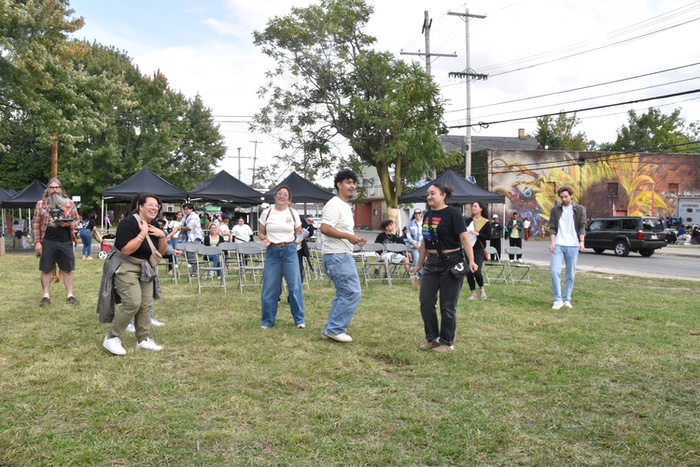
However, Arora’s culminating project, the “I’m From Cleveland Arts and Music Festival,” took place at Jacobs Pavilion on the west bank of the Flats, not in the Campus District. An entrance fee was required to get in. The lack of attendance data for a $465,343 public arts project —no audience numbers, ticketing information or demographic reach—is one of the biggest accountability failures in the reports.
There is no clear mention of the artists served or the public benefit in Arora’s final report. Marketing and production expenses, along with “supplies,” represent over 80% of the project costs. For a highly visible public concert funded with federal recovery money, there is no documentation of who actually showed up.
Across all the reports, there is no standardized account of the number of artists paid, their demographics, or the depth of engagement, with no measurable outcomes, audience reach, attendance or media impact.
The Ohio Arts Council final report, for example, provides for documentation of income and project expenses, including copies of receipts and proof of payment, and shows how grant funds were used. Grantees are required to provide financial, statistical and narrative information and verify activities with published materials. The criteria are divided into categories, including program quality, community engagement, defining and measuring success, and resource management. OAC analyzes its final report data for trends and cultural insights.
“Impart216,” a project by Robin Robinson with institutional partner Ingenuity Cleveland, paid mentor and support artists over $100,000. But there was no mention of the artists, who they were, or how much each was paid. Similar inconsistencies appear throughout the reports.
As a fiscal sponsor, Ingenuity received between $50,000 and $60,000, while a learning trip to Philadelphia, without information on why they went or who was there, cost over $15,000. While the award amount for “Impart216” was almost $400,000, its entire marketing expenses were less than $2,000. Typical marketing budgets for events range from 10% to 20% of the total projected gross revenue.
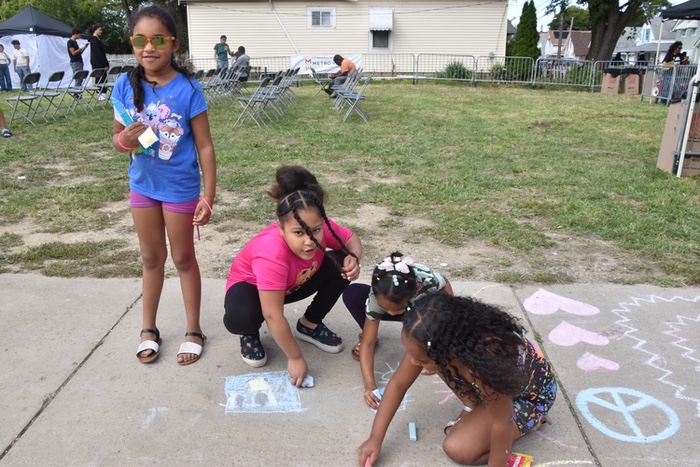
“9413 Sophia Ave,” a project by Malena Grigoli with institutional partner redhouse Studio, reported administrative costs exceeding 35%. Collective Citizens Organized Against Lead, a grassroots nonprofit organization to combat childhood lead poisoning, was paid, along with My Grow Cleveland, a Cleveland-based, BIPOC-owned civic and social organization focused on community engagement and urban agriculture. Indigo Bishop was hired as a public engagement consultant. Other costs included the artist fee, additional workshop facilitators, a part-time coordinator, event planning, engineering, and documentation.
General administrative costs for city-funded or state-supported arts programs in Ohio range from 5% to 10% for specialized initiatives, according to the Ohio Legislative Service Commission. High admin fees, especially since TAF was funded by federal dollars from ARPA, could trigger audit findings and compliance violations.
When combined, the administrative costs, fiscal agency, and management fees for six of the seven projects exceed half a million dollars. Even then, it is not a full accounting of costs. “All My Babies” was not included in the end of year financial records.
When asked why “All My Babies,” a project by Jameelah Rahman, which had the Cleveland Clinic as its institutional partner, was excluded from the final reports, Tyler Sinclair, communications strategist for the City of Cleveland, responded by email. “Assembly [for the Arts] reported that the AOB [All My Babies] Q4 report did not meet the required compliance standard necessary to authorize the release of the final 5% of funding,” he said.
According to sources close to the process, the Cleveland Clinic paid the remaining balance, and Rahman reportedly received the full $482,125.
Brown is scheduled to meet with the Health, Human Services, and Arts Committee overseeing the TAF project on Monday, April 27th, in the Mercedes Cotner Council Committee Room, Room 217, on the 2nd floor of Cleveland City Hall. Sinclair promises that “Rhonda will be giving an elaborate, very detailed presentation about the Transformative Arts Fund, which will include financial records.”
While committee meetings are open to observation, public comment requires pre-registration, often limited to the first 10 speakers for regular meetings. For more information, link to the city’s website at https://www.clevelandcitycouncil.gov/resources/public-comment.
4 Responses to “City’s $3M Arts Fund Lacks Accountability”
Robin Robinson
I would like to take this opportunity to address the misleading information presented in this article. I was the Lead Artist for IMPART 216. Under the rigid budget overview by Rhonda Brown and the City’s financial department, our records were constantly scrutinized and audited.
You also stated that my artists were paid $100,000 and not identified. My 12 artists were always identified as 6 teams responsible for the 6 murals completed in Mt. Pleasant. They were involved in a transformative mural making training academy. Six of the artists are established local muralists (mentors) and six were local trainee artists. The trip to Philadelphia was to introduce the artists and art associates to members of the Mural Arts organization. The organization named ‘The most murals in America’. This experience was to expose everyone to the diversity of public art and to the transformative impact it has on the community.
IMPART 216- was initiated in Mt. Pleasant as a start for revitalization (transformation). I continue to work with the CDC and community stakeholders to improve the community with no additional funding. It was never intended as a one & done project.
I can not speak for the other Lead Artists or Institutional Partners, but you have insinuated fraud in this article without having investigated the facts. We submitted all financial and written progress reports to Rhonda Brown and everything was approved.
Liz Maugans
Public records of this accurate detailed accounting from what I understand were not released. It is not your due diligence but it is on the city and TAF management of released transparency. After several requests for public records they finally released a fraction reported on in this story. More specific requests of detail were asked for but never released. Other people have made requests and have had thw same issues with releases. This is troubling on many fronts that the city is unable to be supportive of artists an partners who have been sharp and stewards of their projects and not publically released detailed records that celebrate outcomes and successes of invested federal dollars. Public records requests were made very specifically by several people I know and another project cited in this article is of most concern to how many artists were involved, who they were, how much were they paid, for what, attendance numbers, charging the public $ and more is just not there in the records they did release after weeks of being requested. Why? This article is about the city and its lack of accountability, communications, and transparency on a huge public project that could have truly been transformative if the city had involved and engaged the creative community from the beginning. You did your work and I congratulate you and your team. I know how hard you all worked with an impossible timeline and the offensive tasks of managing the amounts of money that most arts organizations couldn’t pull off without the staff and infrastructure in place already.
It’s devastating to many in the arts community who have to continuously untangle the power and protection of data, metrics and financials that are not released to tell the story to the public. It hurts everyone. And we keep getting the same results of not being involved in the ideation, design, implementation, a yes, outcomes of these programs and projects. We were all used again and this could’ve been a civic celebration that everyone knew about! Hopefully the meeting on the 27th will reveal why the city did the things they did and didn’t do! I hope so.
Afi Scruggs
First off I am a board member of Assembly for.Arts. I am asko a journalist with 30+ years experience..I am critquing the article in the latter capacity. There are holes in this article. Public records requests are routinely slow to be fulfilled. Once they arrive however, they are just part of the story The author didn’t reach out to any of the artists involved to get answers to the questions he raised. Based on the article, we don’t know whether he talked to Jammelah. He didn’t reach out to Malena to find out why the administrative costs took up 31% of the project. There was no independent outside expert quoted to comment on those numbers and/or to compare them with similar efforts in other areas and states. There isn’t even a definition of transformative arts so those unfamiliar with the term would be informed. This could have been a powerful look at the inner.workings of the Transformative Arts Fund, but unfortunately it’s fallen short.
Afi Scruggs
Please excuse my typos. I am on my phone, not my computer.