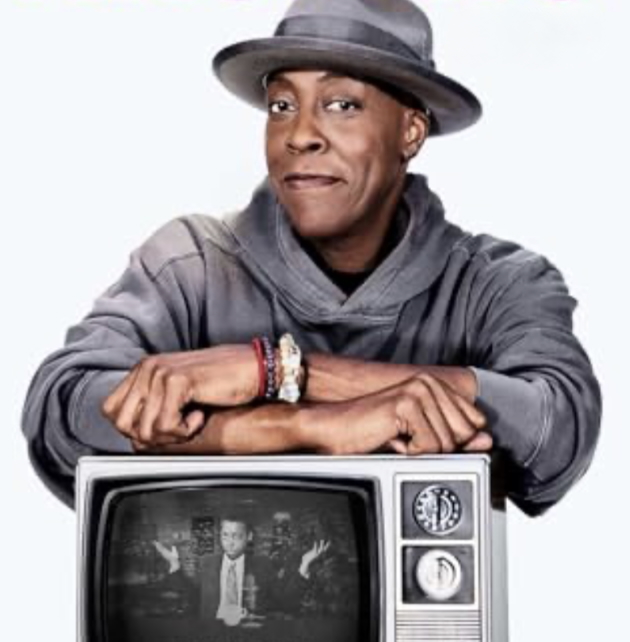
When I was in law school, I worked as a law clerk for Attorney Carl J. Character. It was an office with several lawyers and a secretarial pool. One of the secretaries was a woman by the name of Annie Hall. I remember her as a very funny and jovial person, who frequently had everyone in the office laughing. She frequently talked about her teenage son, Arsenio, and that he was a magician.
At the time I met Annie Hall, she was divorced but sometime engaged in “girl talk” about her prior marriage to a minister, who was many years her senior and what she went through trying to be a twenty-something first lady of his church.
We stayed in touch, but when we both went on to other jobs, I lost contact with her. When Arsenio Hall became a late-night talk show phenomenon, I knew immediately that it was the same Arsenio. Not only did he bare a striking resemblance to his mother, but how many young men from Cleveland had the name of Arsenio?
In his recently published Arsenio – A Memoir, written with Alan Eisenstock (Black Privilege Publishing, a division of Simon and Schuster) Hall tells the story of growing up in Cleveland. When his mom was working — she often worked two jobs — he spent time with his maternal grandmother. In an event that changed his life, one day a cousin brought home a book from the library on magic tricks, and the pre-teen Arsenio was forever hooked. He quirks that the book was never returned to the library and his late fines would probably be around $37,000!
The gutsy young Arsenio made frequent solo trips to a magic shop in downtown Cleveland via the bus. He was such a frequent visitor that when the owner became ill, the owner’s wife prevailed upon Arsenio to work after school and weekends to demonstrate tricks to customers. He was fourteen years old.
The hobby led to an early career of performing at birthday parties and local events and even appearing on local Cleveland television. When he started adding humor to his magic show, he realized that he had found his niche. When a fire at his grandmother’s house destroyed all his magic tricks, his decision to switch to comedy was clinched.
Clevelanders will enjoy the many references to Cleveland sprinkled throughout the book. Hall, born in 1956, and his mom moved frequently after his parent’s divorce, giving him an opportunity to have contact with various neighborhoods and different kinds of people. Some, whom I politely call “street people,” counseled him on dealing with the earthy side of life, lessons and experiences that he carries with him even now.
He attended John F. Kennedy High School but graduated from Warrensville Heights High School. He started his college career at Ohio University and graduated from Kent State University. It’s interesting that while he talks about his fun-filled college experience, he never mentions his classes or what he majored in.
One Amazon reviewer described Hall’s book as more of a work history than a memoir. There is some value to that statement. Hall does not always reveal his personal feelings about the changes in his life. That is likely because, as he reveals early in the book, he can be reclusive and solitary and enjoys his alone time.
Hall chronicles his rise to stardom, taking the reader step by step through his various gigs. Starting out in comedy clubs for virtually no money, he moved up to become an opener for many famous stars like Aretha Franklin and Whitney Houston. Through lots of contacts with famous figures in the entertainment world, he continued to move toward stardom. One key figure was Quincy Jones, who gave him many beneficial tips about his career.
There is a lot of name-dropping in the book and according to Hall, all the famous stars virtually adopted him and quickly brought him into their inner circles, which sometimes makes the reader wonder if Hall is stretching some facts. He describes a chance meeting with Jay Leno that led to a lifelong friendship and career opportunities.
But at the core of Hall’s memoir is the dream of a young boy to be Johnny Carson. He describes how he would sit up at night without his mother knowing, with the volume barely audible watching Carson’s show. He was so enamored that he created his own TV set in his grandmother’s basement and did his own interviews with neighborhood friends. His dream came true when he appeared on the Johnny Carson show and ultimately when he got his own show.
While his emphasis is on the good things that happened to him and the success of The Arsenio Hall Show that ran from 1989-1994, he also talks about the conflicts that arose. Some critics at the time accused the show of being too Black — with too much emphasis on hip hop and Black culture. At the same time, he was accused by a local NAACP representative of not having enough Black representation on his production staff. Yet his TV and studio audiences were predominantly Black. It put him in what he felt was a no-win situation.
His TV success and winning personality led to the big screen where he starred with his good friend Eddie Murphy, and his listing of movie performances, is impressive. Online websites estimate Hall’s worth at $20 million. Not bad for an inner-city youth from Cleveland.
In 1994, Hall decided that he had done enough late-night TV and reprints in the book his letter of resignation. However, media accounts contend that his show was cancelled. Hall is quoted by several online sources as saying that he dropped out of full-time TV work to raise his son who was born in 1998. But he doesn’t say that in the book.
Arsenio — A Memoir is the story of a dream come true. It’s the story of someone who was determined and at the same time lucky. He had supportive family that helped him along the way, and the educational background, fortitude, natural talent and a good system of mentors that allowed him to stick to his dream.
His dream started when, at five years old, he told a joke at a wedding that he attended with his father. He’s been chasing the thrill that he got from that first experience ever since.
Thanks to the Cuyahoga County Library for providing this book for my reading pleasure. It’s available to others. Remember, our Cleveland Public Library and the Cuyahoga County Library System are the free bookstore. Our tax dollars pay for them! Use it!

C. Ellen Connally is a retired judge of the Cleveland Municipal Court. From 2010 to 2014 she served as the President of the Cuyahoga County Council. An avid reader and student of American history, she is a former member of the Board of the Ohio History Connection, and past president of the Cleveland Civil War Round Table, and is currently vice president of the Cuyahoga County Soldiers and Sailors Monument Commission. She holds degrees from BGSU, CSU and is all but dissertation for a PhD from the University of Akron.
2 Responses to “BOOK REVIEW: “Arsenio: A Memoir,” Reviewed by C. Ellen Connally”
Mel Maurer
Very interesting. Always good to learn of a Clevelander making good. Thanks
Real One
Arsenio is sorely missed on late-night and has been for a long time. I hope he decides to come back, we need his comedy at this time in HIS story.
Thank you, Honorable Connally, for your review of his book.