COMMENTARY
We are in a very dark and dangerous period. Politics and cynicism are tearing our country and communities apart. I hear more stories about hopelessness and despair than ever. Horrific circumstances that cut across the very grain of humanity. Within the arts community, history is being erased, shows and exhibitions are being cancelled, and a general assault on our cultural heritage is being waged, tattered and shredded. We are under attack by our very own government, invaded like a foreign entity determined to topple us. The war is here.
Last night, Jimmy Kimmel returned after a weeklong suspension from his parent company, Disney, following barely controversial comments he made about the death of Charlie Kirk. The show was not available on some ABC-affiliated stations owned by major broadcasting groups Sinclair and Nexstar. I watched Jimmy Kimmel Live and felt a great sense of rebellious pride. I even laughed a few times. Minor victories are meaningful.
Humor has long been established as an effective coping mechanism for soldiers and civilians caught up in conflict and crisis, according to the Army University Press, The Professional Journal of the U.S Army. In a 2016 Army Magazine article. Col. Eric Zimmerman explains that the 1948 Department of the Army Pamphlet 22-1, Leadership, and the 1999 Field Manual 22-100, Army Leadership: Be, Know, Do, both included passages espousing the positive aspects of affiliative humor recommends that the “artful application of humor in leadership” should be incorporated into modern doctrine as there are many potential benefits, such as the “development and maintenance of trust and cohesive teams, resiliency and critical and creative thinking.”
Political and military leaders do not need to be comedians, he continued. However, they need to recognize the value of having a collective and individual sense of humor. “Having a sense of humor is important for a positive emotional state and for achieving optimal mental readiness,” said Zimmerman.
Jokes and Their Relation to the Unconscious, a book on the psychoanalysis of jokes and humor by Sigmund Freud, was published in German in 1905. Jokes function as a release valve for repressed desires and thoughts. They allow socially unacceptable sexual or aggressive impulses to find an outlet in a disguised, socially sanctioned way, stressed Freud.
Plato, Aristotle, and Cicero had theories on the function of humor and laughter that paved the way for philosophers such as Thomas Hobbes (17th century). Hobbes described laughter as a feeling of superiority that arises from observing the imperfections of others or remembering one’s own past infirmities. This theory, known as the superiority theory of humor, casts a cynical light on laughter, framing it as a social mechanism for asserting power. He argued that laughter reveals a person’s contempt for others and can even be a sign of hatred.
Historically, women’s humor has been a powerful tool for social critique, challenging stereotypes and subverting expectations. Sophie Tucker, a Jewish singer, debuted in Vaudeville acts in 1906, performing in blackface because producers thought her too overweight and unattractive to sing as a white woman. She despised the form and sought to vary her act. During her decades-long career, Tucker performed cheeky songs such as “Make Him Say Please,” “No One Man is Ever Going to Worry Me,” and “You’ve Got to Make it Legal, Mr. Siegel.” Belle Barth, inspired by Tucker, told her audience, “I know clean stories. I don’t make money with them, but I know them.” Lenny Bruce opened for Barth early in his career.
Humor allows people to distance themselves from problems, increasing positive emotions and easing tension—it operates as an effective coping strategy to be adopted in the face of stress, according to a study published by the National Institutes of Health (NIH). President Trump’s humor, however, is a type of dark humor, used to belittle or offend his opponents. It is psychologically damaging. His deep insecurity and fear-based rhetoric will continue to divide the country.
During the American Civil War, President Abraham Lincoln was known to use humor to cope with the enormous stress of the conflict. He reportedly once said that if he did not laugh, he would “surely die”. In World War 1, British soldiers in the trenches created a newspaper called “The Wipers Times.” This newspaper offered humor, dark satire, and thoughts about the front lines. It aimed to boost morale and help soldiers cope with the war’s terrors.
Freedom of speech, a fundamental human right, is paramount to a healthy democracy and a free society. The free exchange of ideas holds leaders accountable and empowers individuals to participate in self-governance.
Locally, we have seen this to be true in recent stories published here by CoolCleveland. The Cuyahoga Arts and Culture (CAC) reportedly reallocated money earmarked for individual artists, as we reported in 2023 and 2024. We fought successfully with our voice, and as a result, some of the funding was restored as grants to artists.
The Transformative Art Fund (TAF), a $3 million public arts fund created by Mayor Bibb and City Council last year using a share of the city’s federal aid from the American Rescue Plan Act, where artists involved in each project were required to collaborate with a Cleveland-based institutional partner, has been less than transparent as reported by those close to the project. We could use more open discourse as we exercise our speech to continue to champion our creative class.
The City of Cleveland hired Rhonda Brown as the city’s first senior strategist for arts, culture and the creative economy to create a strategic plan meant to “a sustainable infrastructure for the arts at City Hall in partnership with city leaders”. A plan has yet to be articulated and made public. And like CoolCleveland, those in the community are free to ask questions and raise issues.
There is still a lot of work to do to keep our elected officials accountable for taxpayers’ time and money, but these are minor battles compared to the federal government taking over the Kennedy Center and the Smithsonian Institution, suing colleges and universities, and demanding that artists and comedians celebrate an authoritative regime.
Jimmy Kimmel said that President Trump’s threat against ABC was “anti-American”. He defended free speech in his return to late-night television, and while we found humor in his monologue on the president, this is no laughing matter.
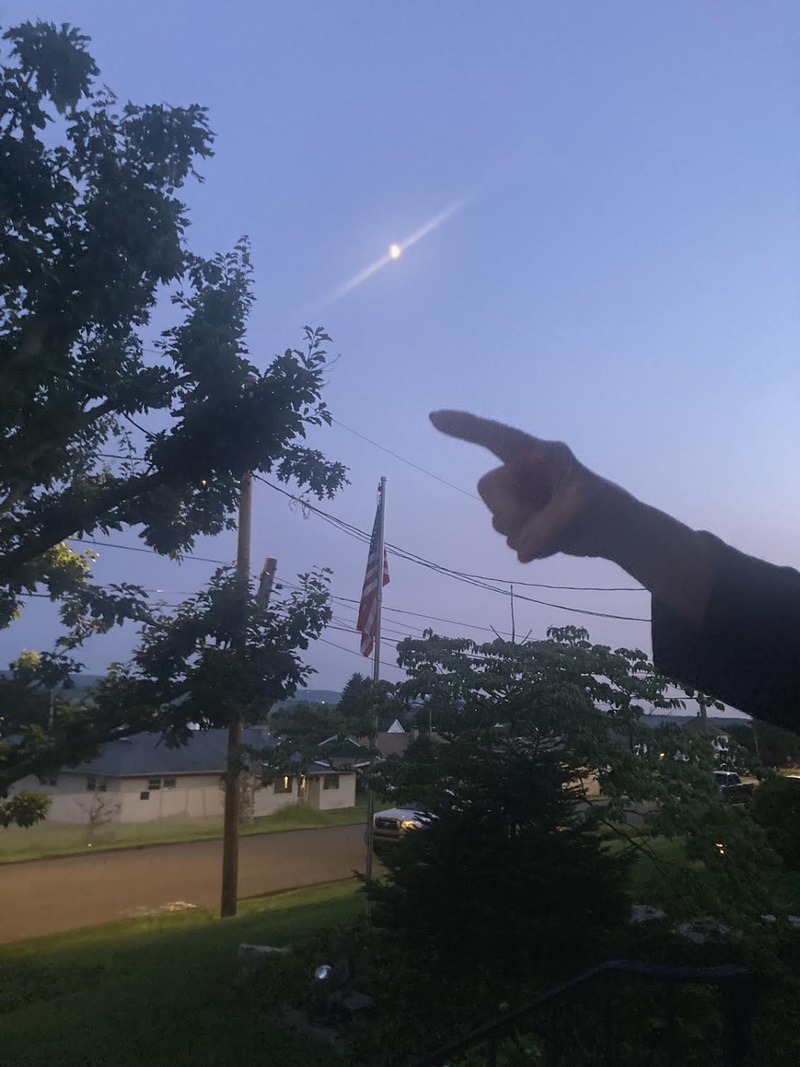
Commentary and image by Bruce Checefsky
 Bruce Checefsky is a filmmaker and photographer, and published writer. He is the recipient of three Ohio Arts Council Individual Excellence Awards, a Creative Workforce Fellowship, and four CEC ArtsLink Fellowships.
2 Responses to “COMMENTARY: The Current War on Free Speech Hits Home”
Joanie Deveney
I looked forward to Jimmy Kimmel’s return and loved his monologue. Nice commentary from Mr. Checefsky as well. I recorded some of what I saw of Kimmel from my tiny TV screen…. For a future art project, that in itself will be based on personal commentary from some locals in our Cleveland community.
Joan of Art
Donna M. Shimko
I love what this article states & teaches. However, too many people are ignoring this vicious threat to free speech. And the OTHER threats to free speech are being ignored. I truly believe that this ‘threat’ to Kimmel et al. is just a diversionary tactic. The REAL threats and hateful attacks are being prepared.