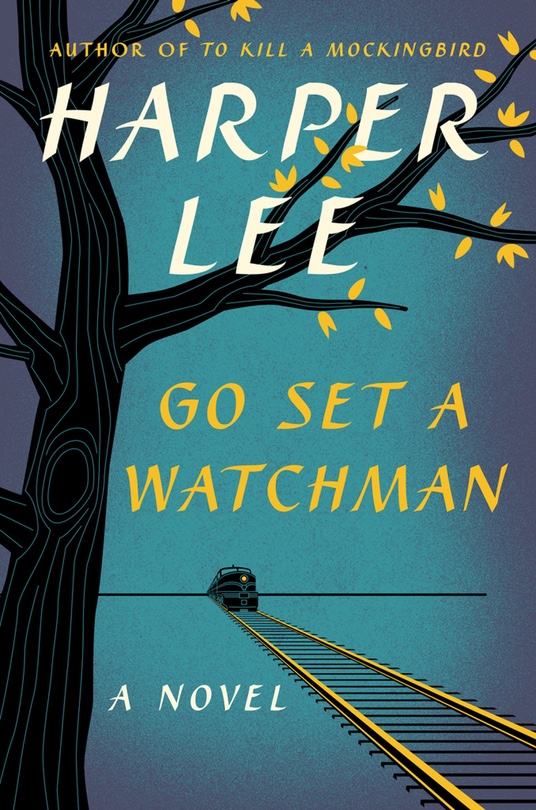
How The Watchman Killed the Mockingbird: The Death of an Iconic Image
[Written by C. Ellen Connally]Twenty years or so ago, I received a frantic phone call late one Sunday evening. It was from a friend whose high school age daughter was required to read the first chapter of Harper Lee’s classic To Kill a Mockingbird by the next morning. The problem was she didn’t have the book. In an age before all-night Walmarts and computer downloads, she had to find a hard copy of the book.
In desperation someone suggested that I may have a copy. As my friend waited breathlessly by the phone and her hapless daughter cried in the background, envisioning the crash of her high school academic career, I pulled a dusty copy off a shelf and grudgingly agreed to transverse half the county to meet the ill-prepared student and effect the transfer. Such was the importance of Mockingbird to the academic success of generations of high school students.
With the July 2015 release of Go Set a Watchman, Harper Lee’s prequel to Mockingbird, the academic perspective of Mockingbird is likely to change, but hopefully not so much as to destroy the image of Atticus Finch that we all know and love. Unfortunately, from now on, the emphasis of scholarly articles, books and PhD dissertations will likely switch from the merits or demerits of Mockingbird to a comparison and contrast of the characters as depicted in Watchman in relation to Mockingbird. Cliffs Notes and other study guides will have to issue revised editions and many a would-be literary scholar from high school to graduate school will have to burn the midnight oil to create a credible analysis of the contrast without the help of the years of previously published critiques.
Ironically, the much-awaited release of Watchman coincides with the current debate over how the nation deals with its collective memory of the American South. Central to that memory is the image of the Confederate flag and other symbols of the Confederacy. Like last month’s removal of the Confederate flag from the South Carolina Statehouse and its transfer to a museum where it rightfully belongs, the publication of Watchman will remove Atticus Finch, the quintessential symbol of what was good in some segments in Southern society to an academic museum to wallow in the shame of bigotry, a fate that he hardly deserves.
Generations of students, readers and moviegoers around the world garnered much of their knowledge of the Southern way of life from Scout and the righteous Atticus — the sole bastion of good conscience and nobility in a Southern town out to lynch the accused, Tom Robinson — a black man who allegedly befouled the flower of white southern womanhood — Mayella Ewell. One courtroom scene pits Atticus, the son of Southern aristocracy, against Mayella’s father and protector, Robert E. Lee Ewell, though white at the other end of the white social stratum from Atticus — or in the vernacular, poor white trash. This clash between the white southern aristocrats and lower-class whites is a theme that Lee attempts to emphasize in Watchman, but doesn’t really succeed in achieving.
At its heart, Watchman is a book about change and accepting change. It strongly reinforces the adage that you can never go home again, a concept that slaps the central character in the face by the end of the novel. The story centers on the now twenty-six year old Scout, who lives and works in New York City. Having dumped her nickname and assumed her real name, Jean Louise, she returns to Maycomb for her annual two-week sojourn. The faithful maid and Jean Louise’s surrogate mother Calpurnia has retired, replaced by the sister of Atticus — a classic of the Old South’s way of thinking. With her brother gone — he died of the same heart malady that killed her mother — and Dill off on a career of his own in parts unknown, Lee introduces Henry Clinton who is described as Jean Louise’s “lifelong friend, her brother’s comrade” and as the story progresses, her prospective husband.
Henry is the poor boy from the other side of the tracks whom Atticus has helped along the way. And as a result of World War II and the GI bill, he has gone to college and law school and becomes the law partner of Atticus and heir apparent to his law practice. The scion of dirt poor farmers, a drunken father and a hard-working mother, he is perhaps a step above the Ewells but clearly not good enough for Jean Louise, the daughter of aristocracy, as Jean Louise’s aunt makes abundantly clear.
Sadly, Jean Louise realizes that the Atticus that we knew and loved in Mockingbird is long gone, replaced by an aging racist or if you want to be kind an aging conformist to the White Citizen’s Council — trying to keep the peace and blacks in their place. To her horror, her would-be fiancé shares the views of her father. Jean Louise suddenly realizes that this is not the place she left or the father she idolized — although it is a little surprising that she makes this visit every year and this is the first time she picks up on this aspect of her father’s life. It’s not like she’s been away for ten years!
This quandary of what to do — accept her father for who he is or abandon him; marry the man below her social class or return to spinsterhood in New York — will give rise to volumes of literary psychoanalysis of Jean Louise and send her to the academic literary couch to be analyzed and examined ad infinitum or ad naseum. Lee tries hard to interject the early loss of Jean Louise’s mother as the determining fact in her psyche, but this theme never seems to get off the ground. So we are left with this burning question: Was the Atticus of Mockingbird a mere aberration?
The meat of the story does not kick in until page one hundred or so. Lee spends a lot of time early in the work describing the town Maycomb, the prototype for the town where she grew up. This first section is a series of vignettes that seem to have been thrown in as a hodgepodge of things written by an amateur on the way to becoming a professional. With a touch of the dysfunctional family in Osage County, Lee even manages to air the dirty laundry of the aristocratic Finches and other upper crust people of Maycomb, raising the question of how far are they from the so-called poor white trash they so distain.
These fragmentary depictions leave the reader with a series of shallow characters that are in much need of development and are only palatable for readers who are familiar with them from the earlier work. Perhaps this is the likely reason that Watchman‘s original submission to a publisher gave rise to a letter of rejection.
Watchman will generate endless hours of debate about the true character of the iconic Atticus. But for many, the transformation of the character is painful. Perhaps it is even more painful because Atticus is the character that the reader most wants to identify with. In an intellectual version of the TV show What Would You Do, the reader believes that he or she would have been just like Atticus — standing up for right in the face of racism and bigotry. So when it turns out that Atticus is not so righteous, readers have to question their own beliefs. Are we forced to look in the mirror and question whether or not we would have stood up to the rest of the town and the White Citizen’s Council, help blacks to register to vote and obtain equality or worked to maintain the status quo? These kinds of self-examination are not easy.
It’s almost like finding out that Heidi’s beloved grandfather was a pedophile. This is perhaps the reason why lots of people don’t want to read the book. They would rather remember the Atticus that they knew and loved . The new Atticus and law associate/would-be son-in-law and partner in bigotry Henry of Watchman not only have clay feet, but those clay feet stick out from under the Klan robes they don’t actually wear, but symbolically don as they sit silent as a white demagogue offers a vicious harangue against Blacks and preaches racial inferiority.
The less-than-noble Henry would have you believe that the KKK was just a social club like the Masons or the Kiwanis. He doesn’t want to rock the boat, since he’s thinking of running for the legislature — “you know, Jean Louise, that just the way things are….” Maybe he was off fighting the Nazis to make the world safe for democracy when the Klan was out killing and maiming people because of their race or maybe he was just looking the other way.
What to me is more disturbing than the book itself is the back story of how Harper Lee’s “handlers” this late in her life took it upon themselves to publish this book. That story alone will generate even more books, tabloid articles and episodes of 60 Minutes, especially in light of Lee’s apparent diminished capacity.
The bottom line is that this work should have remained where it was — unpublished. This whole literary fiasco seems like a grab for money by Lee’s “handlers.” Somebody made money, but in the process, they destroyed one of the most honorable and stand up white guys of American literature — the person that we all wanted to be. They severely tarnished the legacy of Harper Lee and disillusioned generations of students who saw Atticus Finch as the one and only bright and shining star in a sea of bigotry. Why kill off an iconic figure? The answer lies not in the power of the pen, but in the power of the dollar. That’s how the Watchman killed the Mockingbird.

C. Ellen Connally is a retired Judge of the Cleveland Municipal Court. From 2010 to 2014 she served as the President of the Cuyahoga County Council. An avid reader and student of American history, she serves on the Board of the Ohio History Connection and was recently appointed to the Soldiers and Sailors Monument Commission. She holds degrees from BGSU, CSU and is all but dissertation for a PhD from the University of Akron.