When I was five, my fingers were a loom. I wove dandelion sprigs into excellent crowns for my twin sister and me. The weeds were unlimited, an endless supply of raw material. Somewhere along the way, I figured I could open a crown business.
My dad built us a shed that doubled as a playhouse, next to a patch of dirt where grass never quite grew. By August, the ground would dry and crack. In the rainy spring, it became a muddy mess. That’s when my sister and I opened a bakery. We made mud pies and cakes, and neighborhood girlfriends stopped by to become customers and staff bakers.
Everything was alive then, and everything seemed to have a heartbeat. Raggedy Ann had a heart sewn to her smock. I read my Richard Scarry books over and over, always discovering something new with each turn of the page. We made our own books from scraps of paper and a few staples. We wandered the neighborhood and devoured the lake.
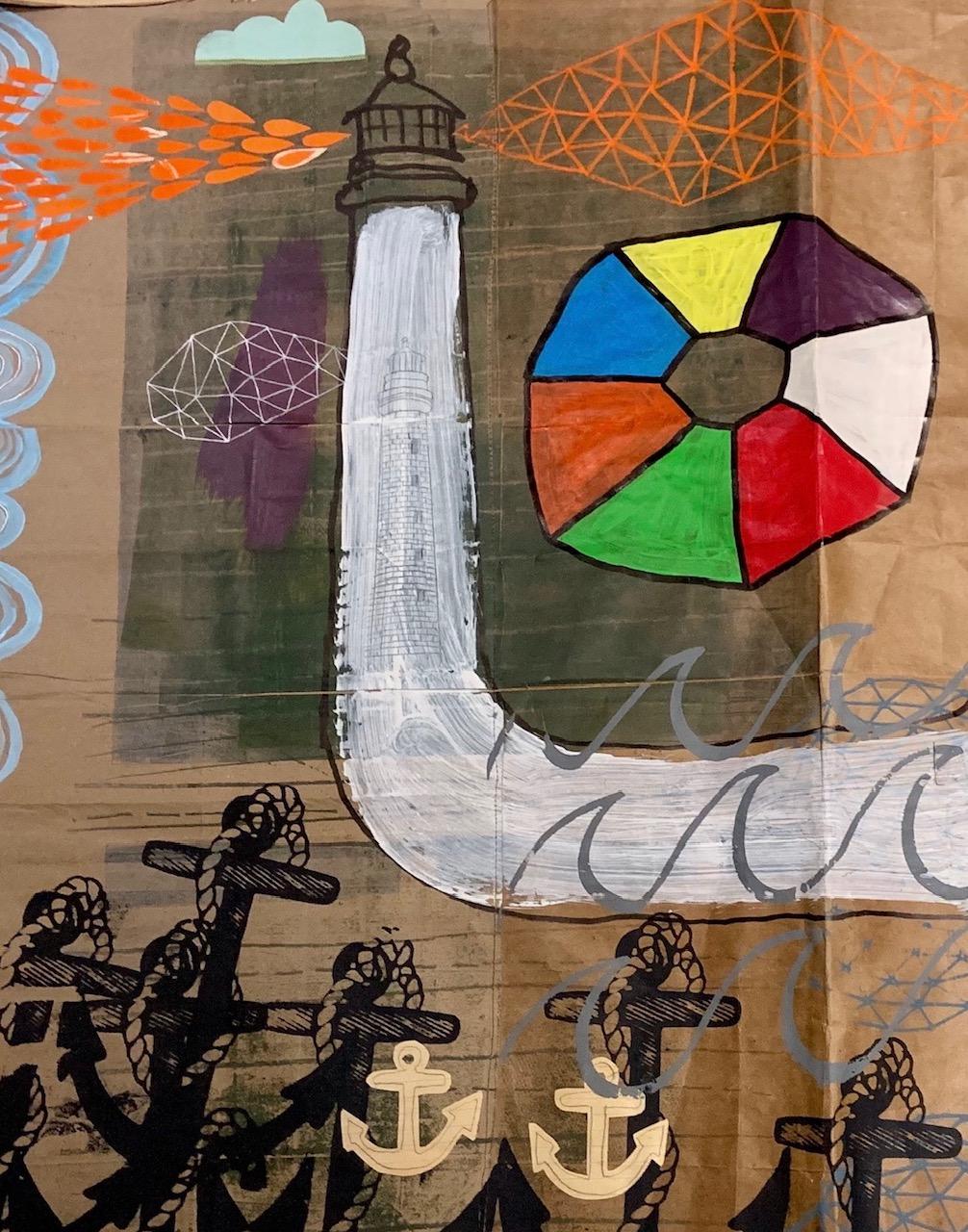
At Clifton Beach, a rocky breakwater stretched toward a flashing lighthouse perched at the end. Reaching it seemed like a risky Jacques Cousteau expedition. The big kids went out there to smoke weed, make out and drink beer. To me, the distance felt endless. Rumors swirled about broken beer bottles, rescue operations, and injuries suffered while navigating slippery, algae-covered rocks beneath the water. Weather could make the journey treacherous. Still, I kept trying to reach that beacon, the light that helped sailors and boaters find their way back to port in Rocky River.
These were my Chitty Chitty Bang Bang years, when invention and play seemed entirely possible. Imagination was a kind of magic that allowed me to disappear into other worlds. The scent of honeysuckle outside the Hoegners’ house or the sight of dead fish washed up on Clifton Beach could transport me somewhere else entirely.
I remember the freedom, risk and adventure of those days. I had time to be idle, to be curious, to wander. I never seemed to get bored. Looking back, I recognize the beginnings of the person I became: industrious, entrepreneurial, inventive, determined, a little sassy, and eager to connect and collaborate with others. I wanted to keep giving these instincts my best shot.
It is a pure joy to be back teaching full-time in the Art & Design program at Cleveland State University. I am exhilarated by my students, who are trying to find their way into adulthood while navigating barriers and uncertainties I won’t attempt to unpack here. I see them lying in the conceptual grass, watching clouds float by, wondering what their flickering futures might hold. I imagine them saying…Who are you, little one? What might you become?
This semester, I teach two professional development courses alongside my other classes: Studio Capstone, a requirement for all seniors, and Artist in the Communities for juniors and seniors. Together, we find our way into studios, creative startups, community tattoo centers, cooperatives, galleries, and wherever artists are making mud pies.
We invite working artists, curators, entrepreneurs and community builders into the classroom. They are mentors, recipe-sharers, creative sages and generous witnesses who tell us how they traveled this terrain under different circumstances and in different times. They share not only the fantasy and possibility of making art a life source, but also the very practical business of keeping that life going.
Hilary Gent, director of HEDGE Gallery, speaks openly about balancing her studio practice with the demands of running a gallery. Dayzwhun, owner of Red Lion Tattoos, shares his experiences with public art murals, studio work and community engagement through his business. Each speaker offers students a glimpse of what might be possible, along with the hard-earned knowledge of what it takes to get there.
Some of this learning is decidedly unglamorous. What can you write off your taxes as an artist? How do you negotiate agreements and contracts, obtain permits, establish an LLC, or budget for a project? How do you find time to make art as a mom? These questions matter. They are part of the creative life too. We work through them as students begin imagining their own ways of making a living, building relationships and finding their place in Northeast Ohio’s creative landscape.
There will always be obstacles, complaints and moments of frustration in any profession. Our work is to help students see beyond the blind spots they may not yet know exist, to recognize opportunities outside the familiar boundaries of their own experience, and to understand that a creative life is built through experimentation, adaptation and persistence.
The future is still an abstract fantasy for many of them. But these conversations help make it tangible. The artists who visit us have survived their own uncertain beginnings. They have taken risks, made mistakes, changed direction and kept going. Their stories become lessons passed from one generation to the next, giving students permission to imagine themselves inhabiting a future that does not yet exist.
On October 29, sixteen CSU students will attend the Cleveland Arts Prize at the Cleveland Museum of Art. I am grateful to Effie Nunes for making this opportunity possible. The students will witness a kind of baton passing: one generation of artists recognizing the contributions of another while making room for those who are coming next.
And something else happens in these exchanges. The artists and visual arts practioners we visit and welcome into our classrooms—Darl Schaaff, April Bleakney, Erin Guido, Stephanie Kluk, David Ramsey, Robin Robinson, Bruce Checefsky, Tameka Robinson, Gregory Scott, Michael Gill, Christy Gray, Bellamy Printz, Thomas Mulready, MaryKay Thomas, Nancy Heaton and Mindy Tousley, among many others—receive something in return. They feel seen, valued and appreciated. Their experiences matter. Their knowledge has somewhere to go.
There is a particular generosity in sharing what you have learned, especially when the road has not been easy. For emerging artists, these encounters offer something more than professional advice. They offer evidence that a life in the arts is possible, even when the route is uncertain.
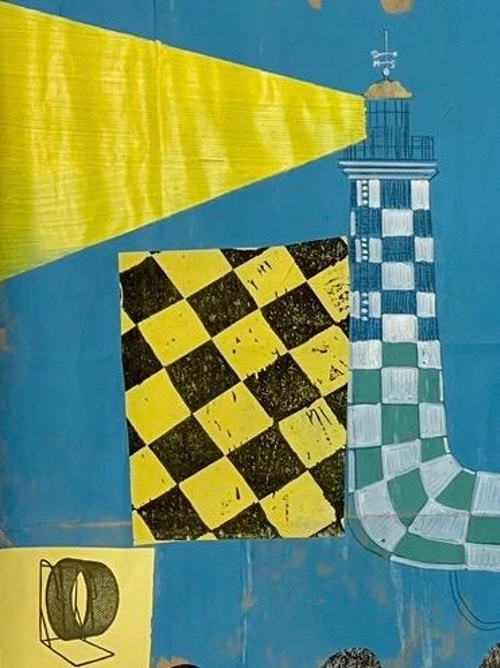
I think often about that lighthouse at Clifton Beach. I was frightened by the slippery rocks, the rumors and the distance. But I kept looking toward the light. I had to discover the terrain for myself, one careful step at a time.
Maybe that is what we are doing in the classroom. We are sharing maps, stories, tools and warnings, but we cannot walk the rocks for our students. They must find their own footing, their own risks, their own reasons to keep going. My students are constantly teaching me.
We can, however, give them room to play, experiment, make a mess and turn a patch of dirt into a bakery and invite others inside.
Because sometimes the mud pies we make as children are the beginnings of something much larger. They teach us to see possibility in what is available, to make something from almost nothing, to invite others into our imagined worlds, and to believe that what we create might sustain us.
And sometimes, if we are lucky, we get to pass that possibility along.