Ohio has a long and illustrious history of women in the judiciary. In 1920, just 10 weeks after the ratification of the 19th Amendment, Florence Allen was elected to the Cuyahoga County Court of Common Pleas, making her the first woman elected to a judicial office in the country. Two years later, she was elected to the Ohio Supreme Court, becoming the first woman in the nation to sit on a State Supreme Court.
In 1923 Mary Grossman became the first woman to serve on the Cleveland Municipal Court. In 1969 Governor James Rhodes appointed Lillian W, Burke to the Cleveland Municipal Court, making her the first Black woman judge in Ohio.
Today, of the 13 judges of the Cleveland Municipal Court, 11 are women, including one Hispanic, Judge Jazmin Torres-Lugo, one Asian American — Judge In Son J. Loving — and Housing Court Administrative Judge, Cheryl M. Wiltshire, who was born on the Caribbean Island of Barbados.
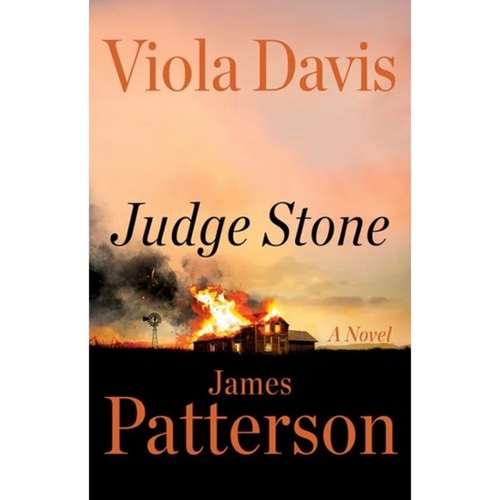
With my background in the law and the court system, it was with some interest that I watched the TV ads by EGOT winning actress Viola Davis touting her new book, Judge Stone (Little, Brown and Co. 2026), co-authored with America’s most prolific writer James Patterson. After being pleasantly surprised at celebrity author Attorney Ben Crump’s new novel, which I reviewed several weeks ago, I decided to purchase the Davis/Patterson novel, rather than get on a long waiting list at the library. Sad to say, it was a big mistake.
Patterson, known for his suspense/thriller novels, particularly the Alex Cross Series, is so prolific that he holds a Guiness Record for books published and money earned. Of late, he has co-authorized novels with such notables as Bill Clinton and Dolly Parton, for which he has drawn some criticism as critics question who really wrote the books.
Judge Stone is the story of Judge Mary Stone, a Black judge in a small town in Alabama, where she grew up. Some of the chapters are written in the first person by Judge Stone. Others are written in the third person and tell the story of other characters in the novel and round out the plot.
The focus of the novel is the racial and political tensions that arise during the trial of a Black female doctor who is accused of performing an abortion on a 13-year-old Black girl. As the novel unfolds, the pros and cons of the issue of abortions take center stage.
Minor characters include KKK members, the judge’s two sisters, a feisty district attorney who is pulling out all the stops to win a conviction of the doctor, and a high-profile white lawyer from Atlanta who mysteriously shows up to volunteer to represent the accused doctor pro bono.
My problem with the book is that Judge Stone does things that no judge would ever do. If the editors had given a preview copy of the book to even a novice judge, that person would have quickly pointed out the many inaccuracies in the judge’s conduct. First, judges don’t get off the bench and walk around the courtroom. This never happens, not even in movies, but it happens all the time in the book.
At one point, when a member of the audience in the courtroom speaks out during a trial, interrupting proceedings, Judge Stone gets off the bench and walks to the back of the courtroom to confront the person. Not only would this be a security risk, but totally out of line for a judge.
When she needs to contact one of the lawyers in her case and cannot reach him by phone, she goes to the local pub to confront him. During litigation, judges cannot have any what are called ex parte communications with the parties — that is, they cannot talk to one side without the other side being present, and she damn sure should not seek out a lawyer in a bar. In fact, she manages to have lots of conversations about the case with various people that I found totally inappropriate.
On another occasion she gets off the bench, approaches the jury and hands out candy. When she wants to ask a witness a question, which is permissible, she gets off the bench and stands in front of the witness.
As a subplot, she lives on a farm that she had inherited from the grandparents. When there is a lawsuit filed against her claiming that there are other heirs who are entitled to a portion of the property, she represents herself!
While being a full-time judge, the novel has her maintaining the family farm and the farm animals that go with it with no additional help. During the trial, her mare is pregnant. The mare has had difficulty delivering a foal in the past and she fears for the safe delivery of the new foal. But she leaves the horse alone all day with no one to check on it. Frankly, the whole subplot about the farm and her doing all the farm labor did not really add anything to the story and seemed farfetched, unless there was supposed to be some subtle analogy between the pregnancy of the horse and the pregnancy of the young girl.
The bottom line is there are a lot of holes in the story and clear violations of judicial ethics. It has “made for TV movie” starring Davis written all over it. As you finish the last few pages, you can smell a sequel, which is probably already in draft form.
The distinguished women judges who have served Ohio and the nation would be chagrined to read about a fellow member of the bench who acts in such disregard for the ethics of the judiciary. In Ohio, Judge Stone would be before the Ohio Disciplinary Counsel before she could bat her eye.
So, from this retired judge’s point of view, leave Judge Stone on the bookstore rack. Don’t be tempted by the big display at Costco, it will soon be on the close out rack at the Dollar Store. There are lots of other good legal thrillers to read, so why make Viola Davis and James Patterson richer? Viola Davis should stick to acting and leave writing to professional writers.

C. Ellen Connally is a retired judge of the Cleveland Municipal Court. From 2010 to 2014 she served as the President of the Cuyahoga County Council. An avid reader and student of American history, she is a former member of the Board of the Ohio History Connection, and past president of the Cleveland Civil War Round Table, and is currently vice president of the Cuyahoga County Soldiers and Sailors Monument Commission. She holds degrees from BGSU, CSU and is all but dissertation for a PhD from the University of Akron.
One Response to “BOOK REVIEW: “Judge Stone” by Viola Davis and James Patterson, Reviewed by C. Ellen Connally”
Mel Maurer
Thanks for the review and the warning. I had just noticed it was in first place on sale and wondered what it was about.